

In The Garden: Dwarf poinciana tree is a small wonder
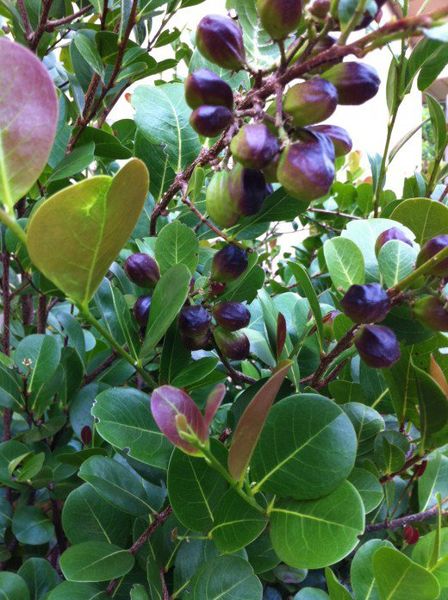

Native to South Florida, cocoplum is a common plant species found throughout Sanibel. The cocoplum is an outstanding texture plant with a “beachy” look. Also known as the paradise plum, the plant species can be found near the coastal beaches and inland throughout tropical Africa, tropical Americas and the Caribbean, in southern Florida and the Bahamas.
The cocoplum is an easy to care for plant that can be used in a variety of different landscape situations. They serve as terrific hedge shrubs or privacy plants, with a typical height of 4 feet but the ability to grow up to about 15 feet tall if allowed. If allowed to grow a little less manicured, their natural rounded shape fits in perfectly in a casual landscape scene. Trim as needed, with a hard pruning in spring if you need to control the plant’s size. You can shear this shrub with hedge trimmers for a more manicured appearance or branch trim for a natural look.
Their rounded, shiny green leaves are set off by red-tipped new growth on the most commonly sold variety. Cocoplum tend to grow best in a full to partial sun location, though the shrubs will grow in shadier areas of the yard. Moderately salt tolerant, the plants need the warmth of Zone 10 to thrive and are evergreen unless winter is harsh. There is a “horizontal” cultivar which can be grown as more of a groundcover shrub and is more salt tolerant than “red tip” cocoplum.
The plant produces small white flowers, followed by fruit that is pink and ripens to purple. The clustered flowers are small, greenish-white, and appear intermittently throughout the year but more abundantly in late spring. In the Caribbean islands of Trinidad and Tobago, jam is sometimes made from the fruit.
In The Garden is a joint effort by all at the local garden center, at 3889 Sanibel-Captiva Road, Sanibel. For more information, contact 239-395-5859 or visit www.facebook.com/rswalshinthegarden.
In The Garden: Dwarf poinciana tree is a small wonder
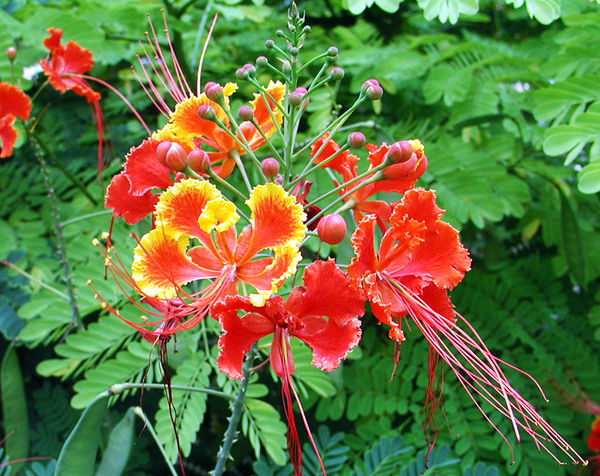

One cannot miss noticing the dwarf poinciana (Caesalpinia pulcherrima) as it stands out and brightens the landscape with its showy reddish-orange and yellow flowers. It will often be seen in the landscape as an ornamental accent tree. It has multiple trunks with fern-like greyish-green leaves. Not to be confused with the enormous royal poinciana tree, it makes a great alternative where there is limited space or for adding height and interest to a blank wall.
The dwarf poinciana tree is native to Mexico and is also the official flower of the Barbados, also known as “Pride of Barbados.” It is a fast-growing tree and one can enjoy the brightly colored flowers yearly from March to October. It makes a great choice to include in a butterfly garden to attract butterflies. The tree has several common names, which include peacock flower, red bird of paradise and flower fence. The dwarf poinciana can be grown as a large shrub, as well. Late fall after the flowers continue to bloom is the best time to prune and shape it. Otherwise, it will grow 10 to 15 feet, which is still significantly smaller the royal poinciana tree.
The dwarf poinciana needs very little maintenance, requiring fertilization only once a year. Like most flowering trees and plants, the flowering tree thrives in full sunlight and well drained soils. It is also moderately salt tolerant and drought tolerant once it gets established.
Overall, the dwarf poinciana is a unique, attractive and ideal accent tree that will continue to impress those who are new to tropical landscapes and flowering tree enthusiasts as well. The tree is a worthy addition to the landscape, especially when there is limited space.
In The Garden is a joint effort by all at the local garden center, at 3889 Sanibel-Captiva Road, Sanibel. For more information, contact 239-395-5859 or visit www.facebook.com/rswalshinthegarden.