

Guest commentary: What does Florida mean to you?
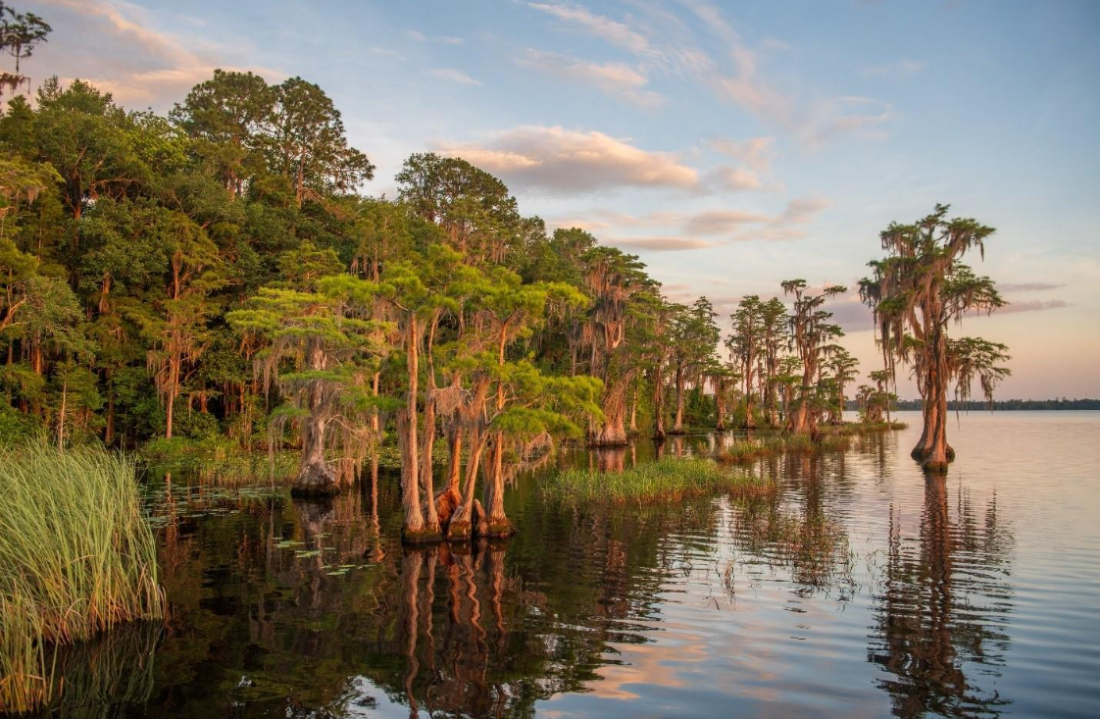
For those who truly see it, Florida likely means the lush, vibrant landscapes, blue waters, and thriving wildlife populations we are lucky to be surrounded by.
In Southwest Florida, maybe it means wide expanses of pristine beaches with natural dunes and plentiful shells, mangrove islands coming alive with sound when birds return to roost, or a glimmering estuary with a pod of dolphins leaping and twirling under the sun.
In South and Central Florida, it could be the quiet wonder of a sunrise in the Everglades, the cool, crystal water of a natural spring, or the sprawling shade of a live oak covered in the flourish of resurrection fern after a hard rain.
In the Florida Keys, it may be a seemingly endless aquamarine horizon above coral reefs with swaying sea fans, crunching parrotfish, and roving reef sharks, or the peace of your favorite seagrass flat.
Or maybe Florida, to you, means the unique splendors that truly shape this state and its heritage. Awe-inspiring shell mounds crafted by the Calusa, sprawling citrus groves, flats of saltwort, or a sleepy marsh dotted with alligator holes.
Whichever version of this Florida feels true to you, it wouldn’t have remained intact without unrelenting land conservation efforts by those who came before us. To live in a place this special means contending with increasingly strong development pressures on the places we treasure.
This pressure is not new, and as natural ecosystems in the state continued to disappear due to rapid development, forward-thinking programs were needed to protect these lands in the long term.
The Florida Forever program is one of those initiatives and has played an integral role in ensuring large swaths of Florida ecosystems remain under conservation for the benefit of all. Though this program is supported by millions of Floridians, its continued funding is not guaranteed, as it relies on annual renewal by the Florida Legislature.
WHAT IS FLORIDA FOREVER?
Florida Forever is the state’s premier public lands acquisition program, focused on protecting Florida’s natural and cultural heritage through the acquisition of conservation and recreation lands that could otherwise become subject to development.
It exists as one of the largest land acquisition programs in the United States and replaced Florida’s previous Preservation 2000 (P2000) land conservation program. With approximately 10 million acres in the state currently managed for conservation, 2.6 million of these acres are due to the previous P2000 and current Florida Forever programs.
Since its inception in 2000, Florida Forever alone has allowed the state to purchase over 1 million acres of land for conservation or recreation. These lands include forests, marshes, wetlands, and countless other natural ecosystems that now function as state parks, aquifer recharge areas, and critical habitat corridors while providing access to the environment for residents and visitors across our state.
At the sunset of the previous P2000 program, Florida voters desired an ongoing land preservation program that would not expire after a set number of years, as the current one was set to. Florida Forever was created through a conservation amendment that received an incredible 72% approval rate by voters in the 1998 election.
The Florida Legislature responded by enacting Senate Bill 908 in 1999, thereby creating the Florida Forever Program. Since then, Florida Forever has been extremely successful at protecting land from development through prioritizing the purchase of largely undeveloped areas with high environmental and cultural value.
PURCHASING PROCESS
For land to be purchased by the state through Florida Forever, the area must meet certain criteria and be approved through a set of processes. First, the land must have a willing seller and reach the Florida Forever priority list. This list is developed by the program’s Acquisition and Restoration Council (ARC) and must be approved by the Board of Trustees (BOT).
Submitted projects are analyzed and ranked by the Florida Natural Areas Inventory (FNAI), which uses a framework that assesses conservation value based on ecosystem services, the presence of endangered species habitat, and proximity to the Florida Wildlife Corridor, among other factors.
The ARC then votes on projects across six categories to rank them by priority before the list is submitted to the governor and cabinet, which serve as the BOT for approval. Purchases are ultimately negotiated by the Florida Department of Environmental Protection (DEP), with funding for Florida Forever made available each year by the Legislature.
A key component of the process is that funding for the program is made available each year by the Legislature in its budget. Due to the popularity of the program, the Florida Legislature made a commitment in 2023 to fund Florida Forever at a minimum of $100 million a year, though the amount required to satisfy historic “full funding” commitments is even higher.
PROGRAM STATUS
On May 29, the Florida Legislature voted to approve a final state budget of $114.5 billion after a lengthy deliberation process, which drew the Legislature into a budget-focused special session. Next, the budget will head to the governor for approval, where allocations could be further altered through the line-item veto process.
Funding for Florida Forever has been the subject of prolonged debate and scrutiny by the House and Senate throughout these negotiations. Initially, Florida Forever was slated to receive $35 million from the Senate, while the House of Representatives eliminated funding, budgeting $0. In the final budget, although the allocation for Florida Forever was stated as $100 million, significant changes and stipulations accompanied this figure. Rather than purchasing undeveloped areas ranked by environmental value, a large emphasis is being placed on conservation easements within the Rural and Family Lands Protection Program, along with the purchase of specific, pre-selected properties.
While conservation easements and funding for Rural and Family Lands are undoubtedly important, these easements incentivize keeping existing working lands in farming and ranching, uses that do not provide public recreational access, habitat for native plants and wildlife, or ecosystem services like aquifer recharge and flood protection. Separating Florida Forever is the purchase of environmentally valuable lands that provide these values while benefiting all Floridians.
What has become clear from the incredibly low initial funding levels and stipulations in the final budget is that the nature of Florida Forever is being altered. While this program has been extremely successful in protecting critical ecosystems and has received strong, lasting public support, we must pay close attention to how its funding and management unfold in the near future.
We must ensure that environmentally valuable lands that benefit and protect the public, wildlife, and Florida’s future are prioritized, as the program intended. We must also pay close attention to funding and commitments made to local programs, like Lee County’s environmentally sensitive land acquisition and management program, Conservation 2020, which receives strong bipartisan support.
Large sections of beloved local areas, including Bunche Beach, Four Mile Cove, and the Six Mile Cypress Slough, were preserved through this program. Additionally, we must ensure that federal protections for natural resources remain intact, several of which currently face being altered or eroded.
As the budget is drafted and Florida Forever’s future is determined in subsequent years, we can only hope the Florida Legislature considers deeply what Florida means to them and what future their decisions will lead us towards.
Allie Pecenka is policy and advocacy associate for the Sanibel-Captiva Conservation Foundation (SCCF). Founded in 1967, the SCCF’s mission is to protect and care for Southwest Florida’s coastal ecosystems. For more information, visit sccf.org.