

Guest commentary: A win for Florida’s wetlands and wildlife
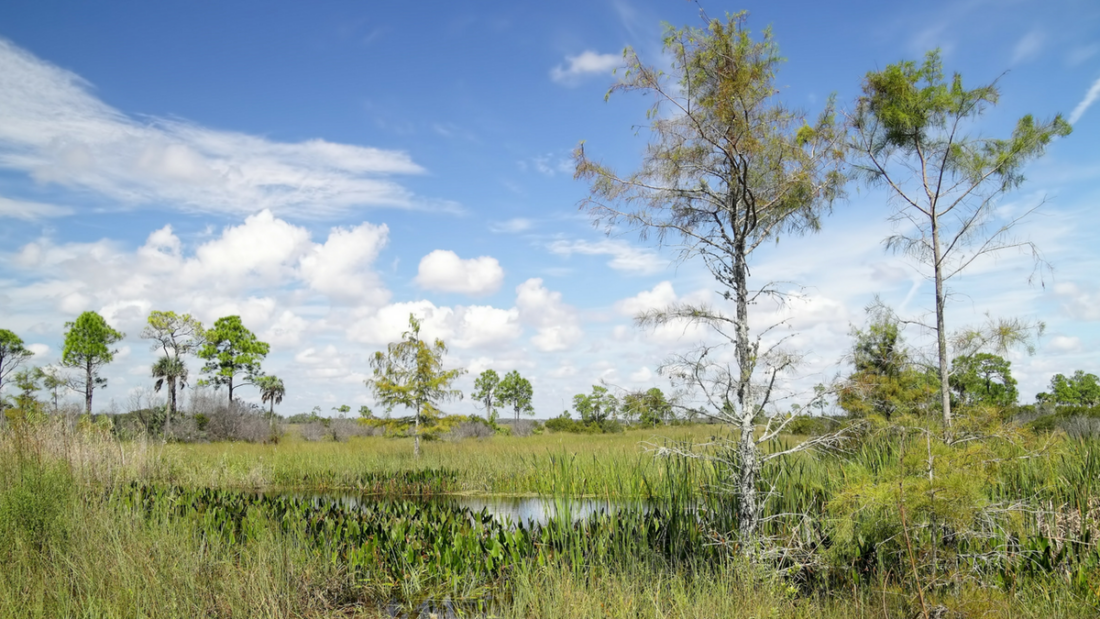
In a win for the environment, a U.S. Court of Appeals upheld a lower court’s ruling that vacated the state assumption of section 404 of the Clean Water Act, leaving permitting power in the hands of the federal government.
404 permits are required for any project that seeks to dredge or fill wetlands and other waters of the United States.
These permits are incredibly important to environmental conservation for two reasons.
First, they ensure that the waters of the United States will not be damaged by a planned project. Our waters are a shared resource, and any injury has the potential to spread quickly, can negatively impact many other parties, and can be difficult to rectify.
Second, the 404 permitting process is one of the main triggers for the National Environmental Policy Act (NEPA). NEPA is one of the primary tools utilized to protect our environment. The law requires that major federal actions be evaluated so that the ramifications of the decision are understood. The law does not prevent environmental damage; it just ensures that any impacts on the environment are understood and taken into consideration. Many of our environmental protections are not self-executing, which means that in order for a full assessment to occur, NEPA must be triggered.
Generally, the commencement of a NEPA analysis precedes assessment of a project for compliance with the Endangered Species Act, Migratory Bird Treaty Act, Magnuson-Stevens Act, and other laws that help protect our environment.
The fear with the state assuming 404 permitting is that it removes the “federal nexus” required to trigger a NEPA review. Without this trigger, projects can move forward under state oversight.
We saw this play out immediately after the state took over control of the program and granted permission for the Kingston project to “take” over 20 panthers annually, roughly 10% of the population. As was held by the lower court and upheld in this recent decision, the state’s mechanisms alone are insufficient to protect our natural spaces.
While this is good news for panthers, smalltooth sawfish, and all the other flora, fauna, and humans who appreciate a robust natural environment, recent federal actions demonstrate priorities shifting away from responsible stewardship of our natural resources.
Most recently, the U.S. Army Corps of Engineers announced that it will stop regulating wetlands across the country, based on the 2023 Sackett v. EPA ruling that redefined “Waters of the United States” and how they interact with wetlands.
There is still much to be done to rebuild the robust protections for our waterways and natural spaces, but the court’s decision to allow the federal government to retain control of the 404 permitting process is a good start.
Matt DePaolis is environmental policy director for the Sanibel-Captiva Conservation Foundation (SCCF). Founded in 1967, the SCCF’s mission is to protect and care for Southwest Florida’s coastal ecosystems. For more information, visit sccf.org.