

Wading Bird Monitoring Program offered through SCCF
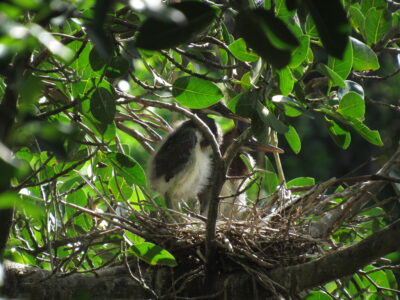
By MEGHAN BRADBURY
mbradbury@breezenewspapers.com The Sanibel-Captiva Conservation Foundation (SCCF) Coastal Wildlife team has launched a wading bird monitoring program across the island to encourage community participation and learn more about birds that use Sanibel.
SCCF Coastal Wildlife Shorebird Technician Samantha Hinsz said they are trying to understand wading birds on Sanibel Island, and for the past year they have begun taking surveys on all of their properties.
“Wading bird nesting season is coming up quickly,” she said, which is the ideal time to understand where they are nesting and how they are doing on the island.
The next wading bird nest monitor training will take place from 9:30 a.m. to 11 a.m. Tuesday, Nov. 17, at SCCF. The second training will take place Tuesday, Dec. 15.
For more information and to register, visit https://tinyurl.com/5t2ybfap. The training is offered both in person and virtually, with training material provided for participants.
Hinsz said they are looking for 20 total volunteers this season, as the first year is a pilot program.
“Each training has 10 slots,” she said.
Hinsz said earlier this year they put out information looking for people to report wading bird sites.
“We got some great information from the community,” she said. “Now that we are getting closer to the nesting season, we will perform volunteer monitoring.”
The hope is to be able to identify new nesting areas and get the community involved.
“We want people to be able to get a better idea for wading birds. The interior wetlands are protected and they draw a lot of birders to the island,” Hinz said, adding that people care about them and enjoy them. “There are a lot of different nesting areas for people to become engaged in citizen’s science.”
She said the citizen’s science will also provide insight on what kind of management strategies SCCF can have to support increased wading bird nesting.
“It’s going to be a great information gathering tool for us as well. I think people will be very excited to know what they are looking at,” Hinsz said.
Although not every species seen use the island to nest, there are between 12 to 13 that do, which include the little blue heron, wood stork, tricolored heron and rosette spoonbill.
“When we have them present, if any of them are nesting, it’s really important data to contribute to our region,” she said.
The wading bird nesting season is kind of a variable factor, as it depends on the species and conditions. Hinsz said with a wet winter coming up, they are not sure if it will affect wading birds’ timing for nesting.
“Nesting will really start kicking up in February and March. We are hoping to get training done and begin monitoring in January,” she said.