

Students explore careers through partnership
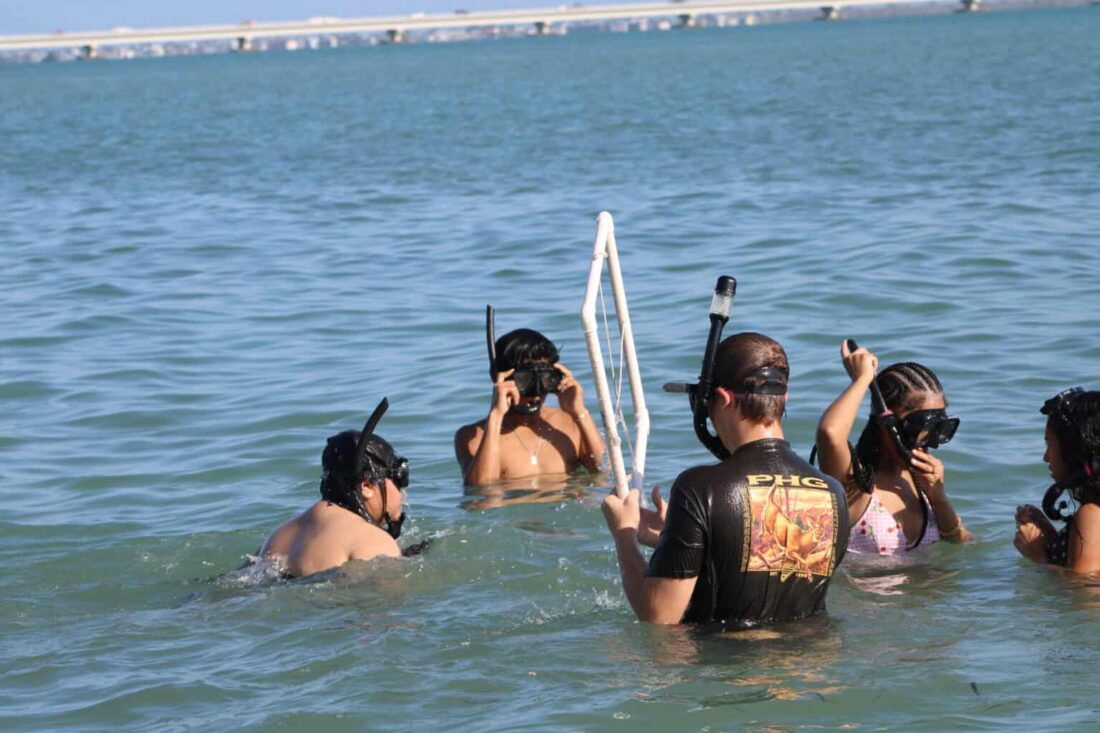
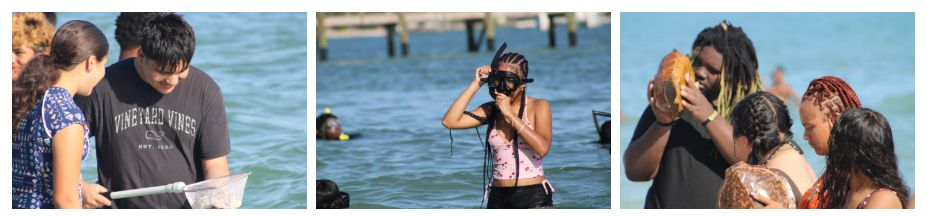
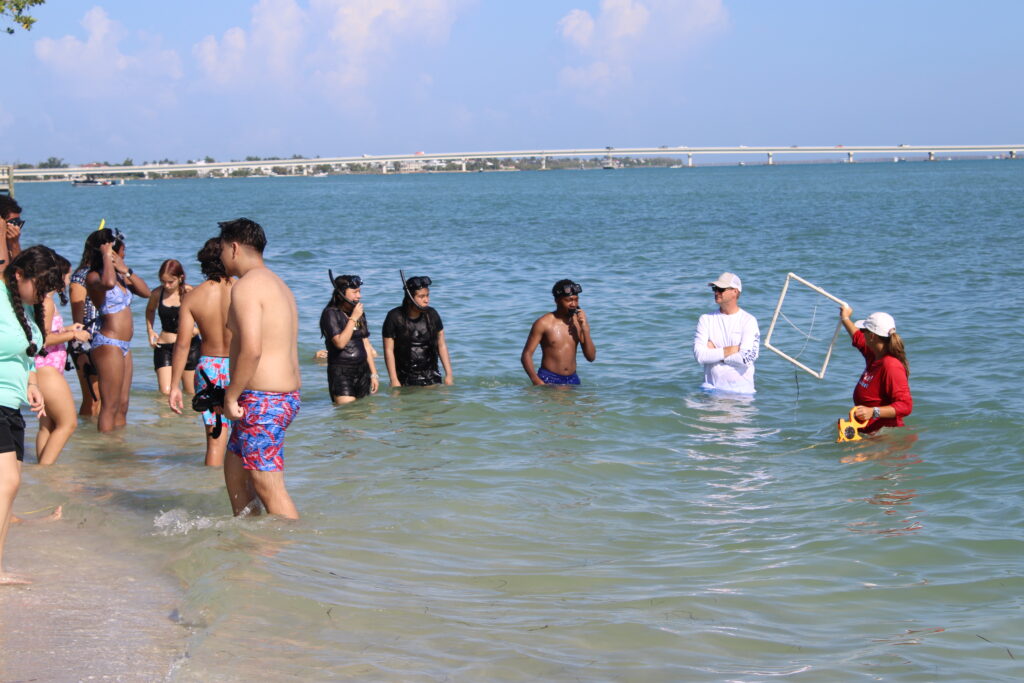
The Sanibel Sea School reported that it welcomed 45 high school students from Florida Gulf Coast University’s (FGCU) Outreach Programs on June 26 for hands-on marine science and more.
The visit was part of FGCU’s summer career exploration program, which helps students discover potential career paths while building an understanding of the education, skills and experiences needed to pursue them. Working with the university, staff designed a field trip focused on science careers and environmental stewardship, weaving in research and monitoring conducted by the Sanibel-Captiva Conservation Foundation (SCCF).
“As part of SCCF — a nonprofit that protects and cares for Southwest Florida’s coastal ecosystems through conservation, research, education and advocacy — Sanibel Sea School is able to connect students with a variety of possible career paths,” Sanibel Sea School Director Shannon Rivard said.
The students represented three of FGCU’s grant-funded, pre-college outreach programs: TRIO Talent Search, the College Reach-Out Program (CROP), and FGCU Scholars in partnership with United Way.
The day began with educators introducing themselves and sharing their own educational journeys, career paths, and the opportunities available through the Sanibel Sea School and SCCF.
“Students learned that careers in science can extend far beyond what they often imagine, including education and research, wildlife monitoring, habitat restoration, and conservation,” she said.
In the field, students rotated through three interactive stations. At the seining and dip netting station, they collected and identified marine organisms while learning how scientists use standardized sampling techniques to monitor changes in coastal ecosystems over time.
During the snorkeling station, students used transects and quadrats to measure seagrass coverage and observe marine habitats firsthand. They learned how the scientific tools enable researchers to repeatedly monitor the health of seagrass beds and track year-to-year changes.
“The students were super engaged when it came to the quadrat and measuring the seagrass they found,” marine science educator Jordyn Sateren said. “They were all working really well together. It quickly became a favorite activity.”
Along the beach, students learned about the sea turtle nesting process. Educators explained how long-term monitoring helps scientists protect vulnerable species and informs conservation decisions throughout the region.
The Sanibel Sea School noted that after the activities ended, several students stayed behind to ask about internships, volunteer opportunities, and future careers with the SCCF and Sanibel Sea School.