

SCCF staff working on The Sanibel Report 2.0
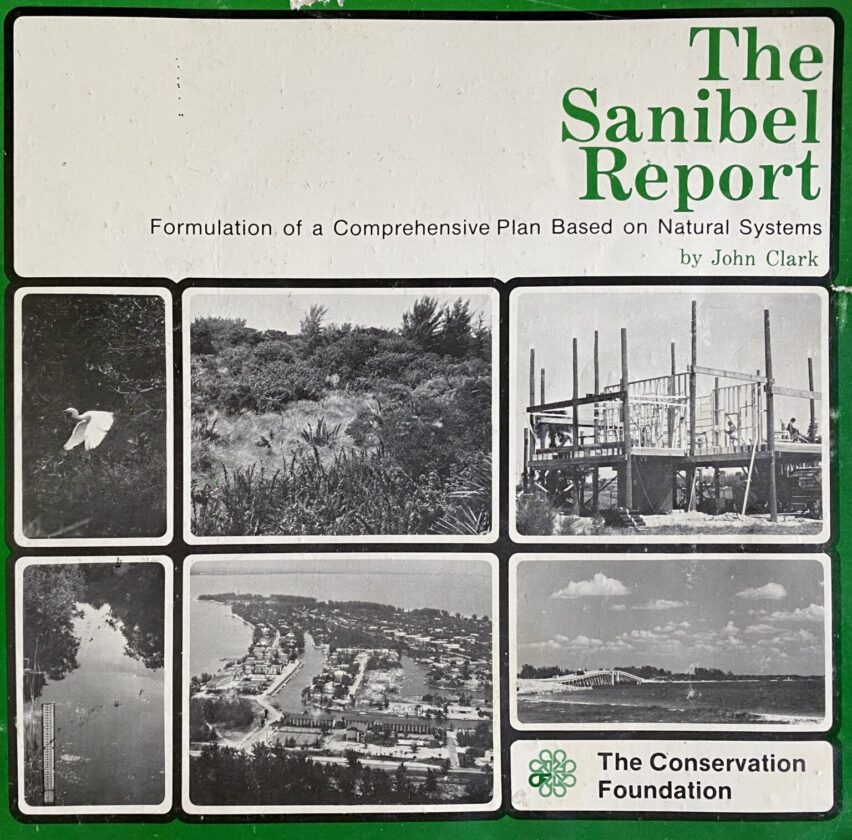
The Sanibel-Captiva Conservation Foundation (SCCF) reported that more than 50 years ago, it led a community-wide effort to raise $100,000 to fund The Sanibel Report — an intensive scientific analysis of the island’s natural systems. That research became the foundation for Sanibel’s comprehensive land use plan.
The Sanibel Report is less well known than the resulting land use plan, The Sanibel Plan, published in 1976 by the firm Wallace, McHarg, Roberts and Todd. But the report came first, and it established the scientific understanding of how the island’s ecology sets natural limits to growth.
Now, the SCCF and partner organizations are developing The Sanibel Report 2.0, which will help inform the work of the city of Sanibel’s Sanibel Plan Update Steering Committee.
THE ORIGINAL REPORT
Sponsored by the SCCF and led by John Clark of the Washington, D.C.-based Conservation Foundation, the original Sanibel Report was more than 300 pages. It outlined the history of the 11,000-acre island alongside 20 in-depth reports covering every facet of its natural systems — from beaches and mangroves to interior wetlands, hydrology, and wildlife.
“The Conservation Foundation undertook its Sanibel work not only to help the citizens of Sanibel protect their natural systems, but also in an effort to improve the methodology of conservation,” Conservation Foundation President William Reilly said in the report’s introduction. “Specifically, we hoped to demonstrate the contribution that a thorough study of natural systems can make to the local planning process.”
The resulting land use plan has guided city officials and staff in shaping Sanibel into what it is today. The island’s native landscapes, abundant birds and wildlife, unraked beaches, and conservation ethic all trace back to that original scientific study and the sound planning process it made possible.
SANIBEL REPORT 2.0
Several SCCF scientists have joined professors from Florida Gulf Coast University (FGCU), scientists at the Naples Botanical Garden and a University of Florida law professor to review the scientific literature since the original report. Their findings will be presented to the Steering Committee later this year when the report is published.
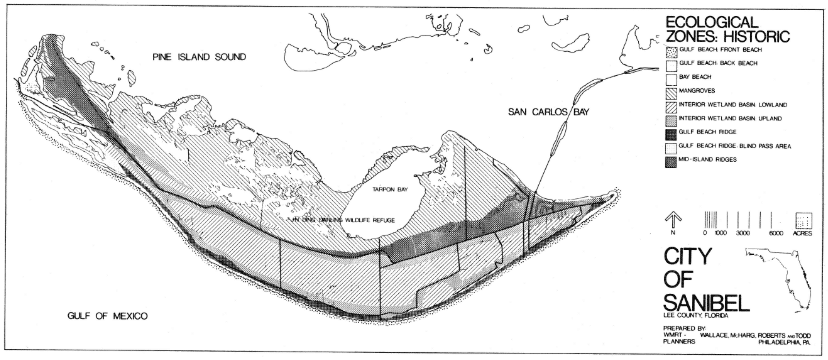
“The Sanibel Report 2.0 consists of chapters organized by ecological zone and will inform the Steering Committee of the scientific discoveries since 1974,” SCCF Marine Lab Director Eric Milbrandt, Ph.D., said.
SCCF’s Coastal Wildlife Director Kelly Sloan, Environmental Policy Director Matt DePaolis and Wildlife & Habitat Management Director Chris Lechowicz are also contributing to the update.
Expected to be about 150-200 pages, the report will be organized into four chapters:
– Mangroves
– Nearshore/Estuarine
– Beaches and Wildlife
– Interior Wetlands
Earlier this year, participating scientists held a workshop to outline each chapter, covering the current state of the science, threats, management targets, performance measures, science gaps and management tools.
“Updating The Sanibel Report will ensure continued protection of the barrier island’s unique and threatened land and water quality resources, its interior wetlands, beaches and mangroves,” he said.
The publication of the report will coincide with the 50th anniversary of The Sanibel Plan.