

SCCF: Record-breaking loggerhead nesting continues
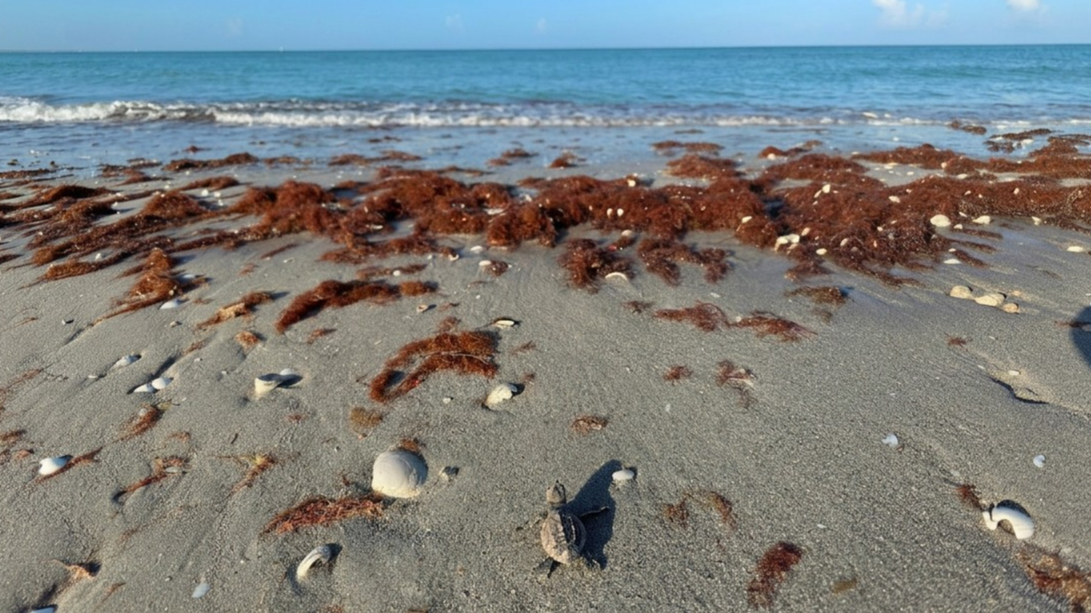
The Sanibel-Captiva Conservation Foundation’s (SCCF) sea turtle team reported that the new loggerhead nesting record on Sanibel continues to rise as nesting winds down on the island.
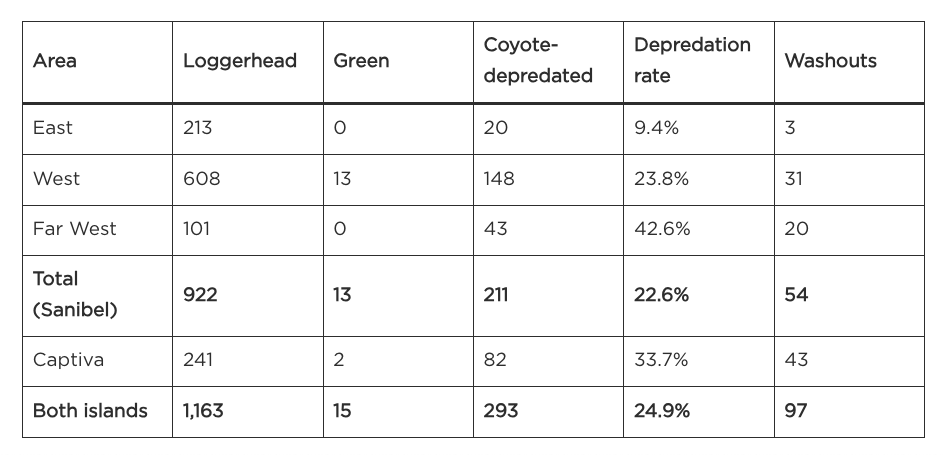
As of Aug. 12, Sanibel’s loggerhead count had reached 922 nests, surpassing the island’s previous single-season record of 878 set in 2023.
Sanibel’s west end — spanning the West and Far West zones — had also pushed past its own recent high, sitting at 709 loggerhead nests, compared to 631 previously.
Combined, loggerhead nests across Sanibel and Captiva totaled 1,163 — just shy of the 1,177 loggerhead record set in 2023. Adding both islands’ green sea turtle nests brought the season’s total count to 1,178 nests as of Aug. 12.
Sanibel alone stood at 935 nests — 922 loggerhead and 13 green sea turtle — while Captiva had recorded 241 loggerhead and two green nests, for a total of 243.
DEPREDATION RATE ALSO CLIMBING
As of the latest count, Sanibel’s coyote depredation rate had risen to 22.6%, with 211 nests depredated — more than double the federal Loggerhead Recovery Plan’s 10% management threshold. Captiva’s rate had climbed even higher to 33.7%, with 82 nests depredated. Between the two islands, it averaged to approximately one in four nests experiencing coyote depredation, with a depredation rate of 24.9%.
The SCCF reported that the depredations remain heavily concentrated on Sanibel’s western beaches, where the Far West zone — between Bowman’s Beach and Blind Pass — continued to see the most severe impact of any zone on the island. The Far West zone’s depredation rate — now over 42% — remained more than four times the recovery plan’s threshold.
HATCHLING COUNTS WILL TELL FULL STORY
The SCCF reported that the season’s record loggerhead count reflects decades of conservation work protecting sea turtles on Sanibel and Captiva, home to one of the longest-running sea turtle monitoring programs in the United States. But the rising depredation numbers suggest that predation pressure — flagged as a growing concern in July — has continued on the trajectory researchers expected, climbing further as the season heads into its final weeks.
Final totals and the true scale of this season’s impacts will not be clear until nesting wraps up, the last remaining nests either hatch or experience predation or washouts, and total emerged hatchling counts are finalized.
During the 2023 record-breaking loggerhead nesting season for Sanibel and Captiva, approximately 43% of the nests on the islands were depredated, resulting in the lowest number of emerged hatchlings at that time since 2016.
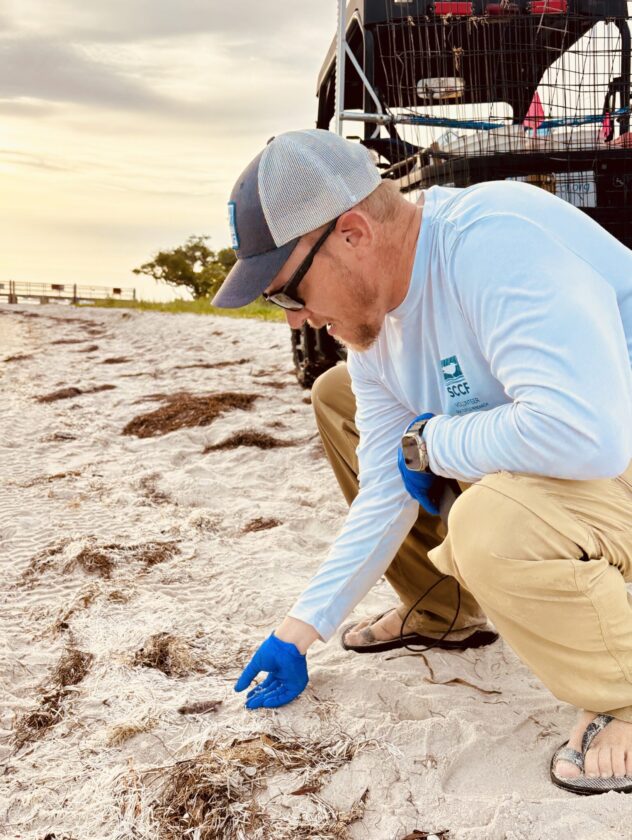
The SCCF’s sea turtle team continues to monitor nests daily across both islands. Visitors and residents are encouraged to do their part to help protect nests and hatchlings by following these guidelines:
– Lights out. Lights from flashlights and beachfront houses can disorient sea turtles on the beaches. For beach lighting guidelines, visit https://sancaplifesavers.org/sea-turtles/.
– Fill in holes. Sea turtles, especially hatchlings, can become trapped in holes dug in the sand.
– Don’t disturb nesting turtles. Never get too close to, touch, shine lights on or take flash photos of nesting sea turtles.
– Remove obstacles from the sand. Sea turtles can’t move in reverse, so it’s important to flatten sandcastles and remove all chairs, tents, gear and toys from the beach at the end of the day.
– Properly dispose of trash. Not only does litter attract predators, sea turtles can ingest or become entangled by discarded trash and fishing line.
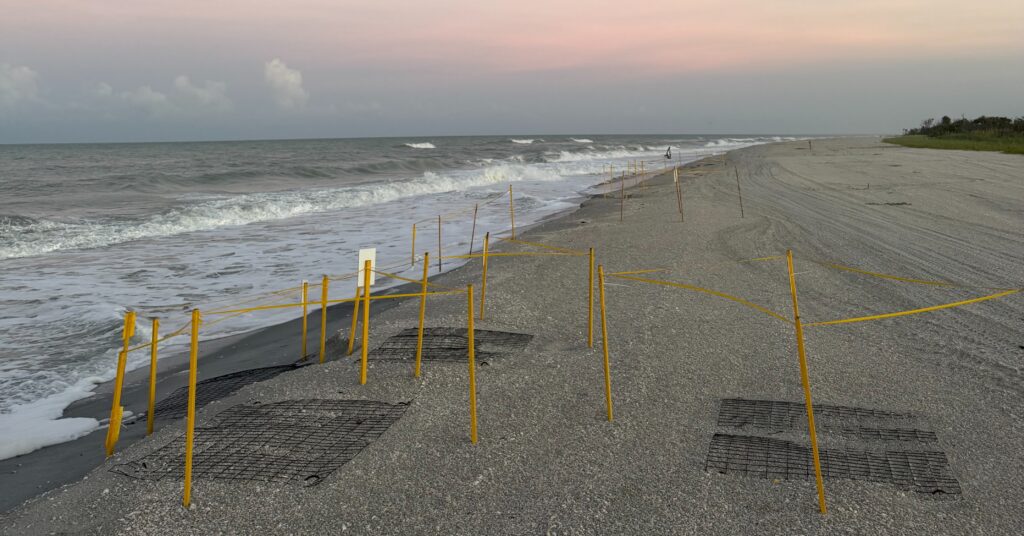
– Don’t disturb screens. The protective nest screens prevent predators from eating the eggs and allow hatchlings to emerge through the holes without assistance.
– Call for help. Report any issues with nests, nesting turtles or hatchlings by calling the SCCF’s Sea Turtle Hotline at 978-728-3663 (978-SAVE-ONE).
For more information on protecting nesting sea turtles, visit https://sancaplifesavers.org/.