

Public can report horseshoe crab sightings
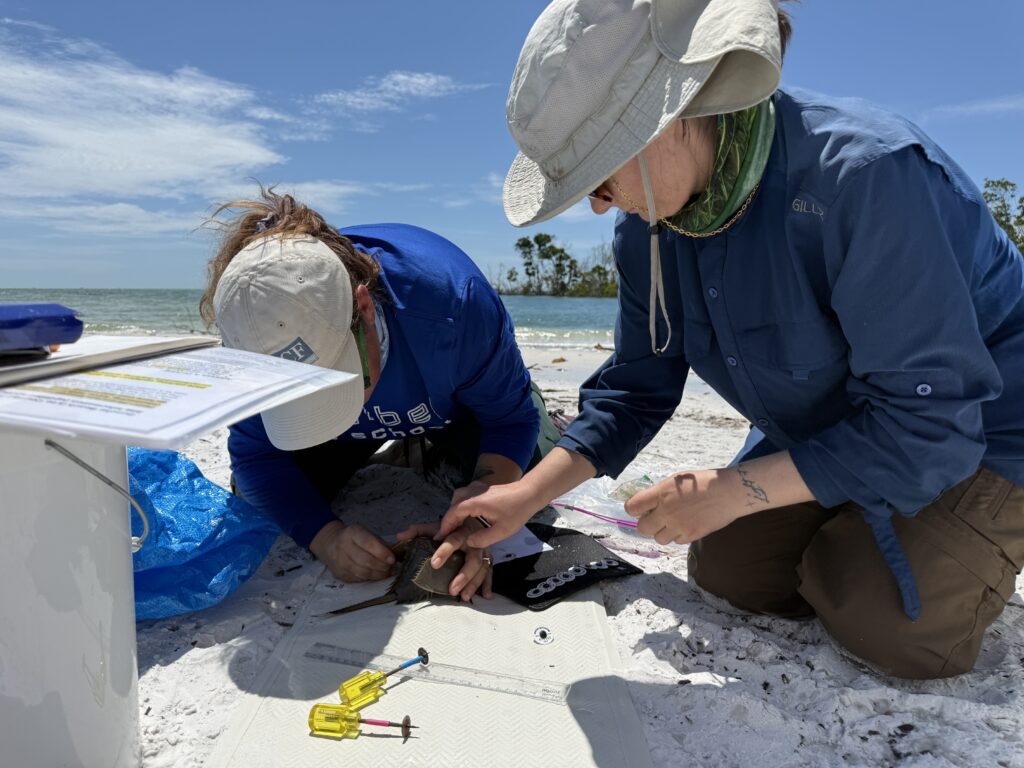
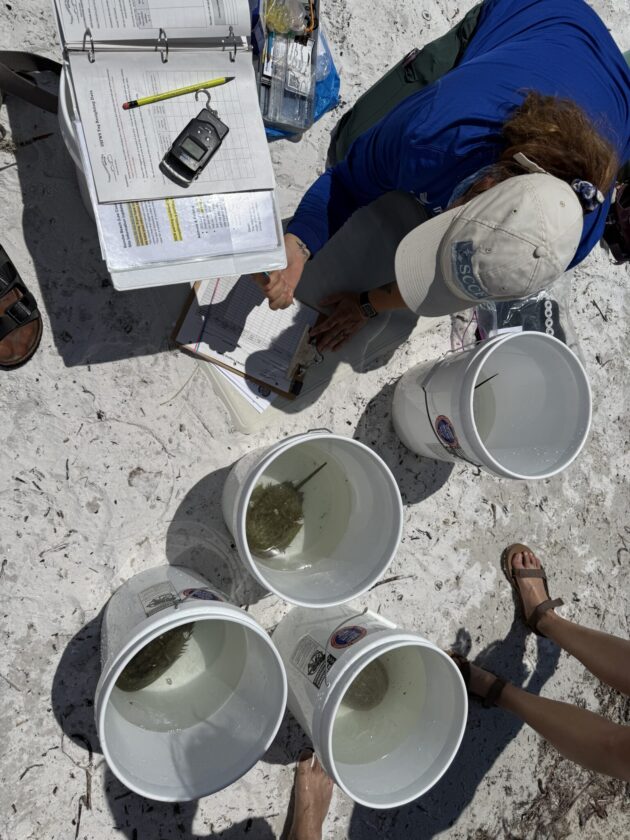
The Sanibel-Captiva Conservation Foundation (SCCF) reported that scientists will be studying horseshoe crabs in Collier and Lee counties and could use the public’s help.
Horseshoe crabs (Limulus polyphemus) can be found on many Florida beaches. Some people may have had the opportunity to come across the prehistoric creatures spawning during a high tide, or perhaps found one of their molts on the shore.
The SCCF noted that horseshoe crabs along the Gulf coast of Florida are of special conservation interest because they remain unprotected from harvesting and face many threats. Horseshoe crabs and their eggs are extremely important food sources for migratory shorebirds, including red knots, a declining shorebird that has one of the longest migration paths of any bird.
Florida Horseshoe Crab Watch conducts survey seasons from September through October and March through April. Surveys are conducted during new and full moon high tides during normal business hours. This year’s fall surveys will start on Sept. 8 and end on Oct. 26.
Citizen scientists can report horseshoe crab sightings via a survey at https://survey123.arcgis.com/share/e7946f74bcda43128eea82690b95047a?sm=f8QN2JV2JBVp4TIiJ61IE7WsMBGDooQ2rzmR8u47ugM%3d?sm=f8QN2JV2JBVp4TIiJ61IE7WsMBGDooQ2rzmR8u47ugM%3d.
“We are always looking to expand our survey efforts to accessible beaches that experience nesting activity,” UF/IFAS Extension Collier County Sea Grant Agent Mike Sipos said.