

Growing next generation of environmental scientists
This summer marked the fourth year of the Sanibel Sea School’s A Week in the Field program.
The free, application-based camp is designed to give high school students an immersive look at what it means to work in marine and environmental science. It lets students step beyond the classroom and experience the questions, challenges and unexpected discoveries that come with real field science.
This year’s program was made possible with support from the Sanibel-Captiva Shell Club.
“For the first time, we were able to offer two weeks of A Week in the Field, creating an exciting new opportunity for students at different stages of their high school careers,” Sanibel Sea School Director Shannon Rivard said.
From July 27-31, the first week focused on building foundational skills and exploring the ways that Sanibel-Captiva Conservation Foundation (SCCF) scientists study and protect Southwest Florida’s coastal ecosystems. About half the students traveled from outside of Florida, with campers coming from Colorado, Oklahoma, Arkansas, Montana and even England.
WILDLIFE ENCOUNTERS
The week was filled with memorable moments in the field on Sanibel.
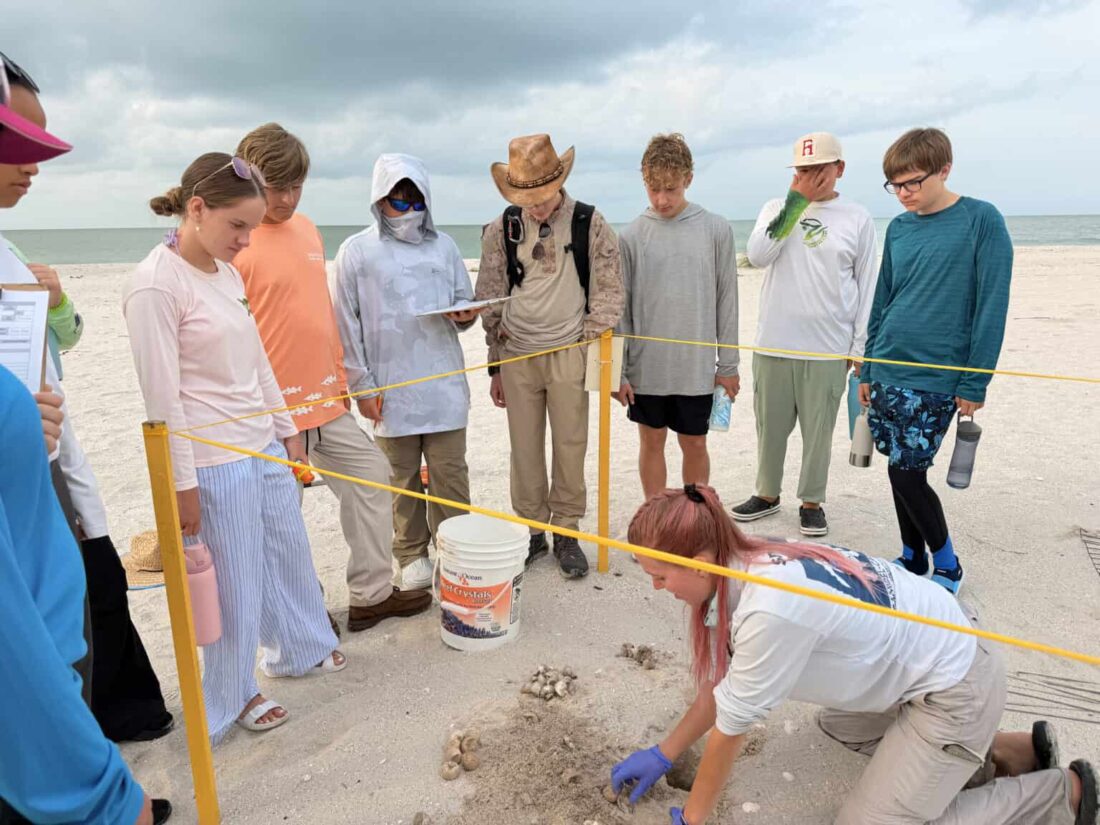
– During a sea turtle inventory, students encountered three live hatchlings that were ready to be released that morning. For nearly everyone — even a few staff members — it was their first time seeing a sea turtle hatchling in person.
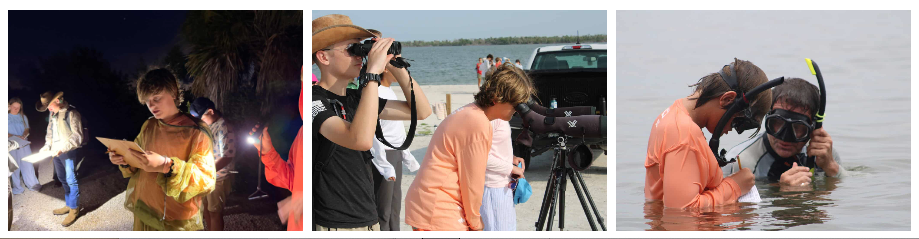
– During a bird population survey along the causeway, the group spotted baby least terns and baby black skimmers, followed by hundreds of comb jellies washing up on the beach.
– A nighttime frog and toad call survey brought a different kind of excitement when an alligator appeared in one of the ponds.
INSPIRING FUTURE CAREERS
Students also spent time learning about environmental policy and the challenges involved in turning scientific information into action. They engaged in discussions about the issues surrounding Lake Okeechobee and then had the opportunity to put some of their learning into practice by flying a drone.
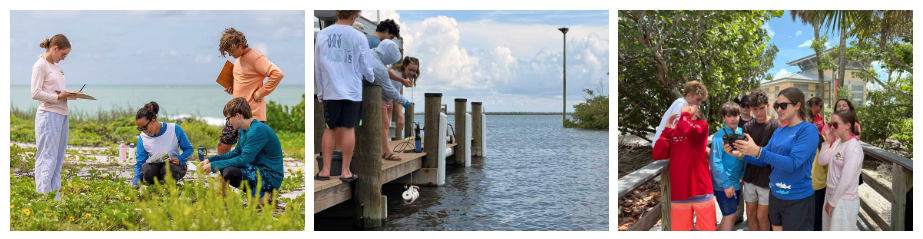
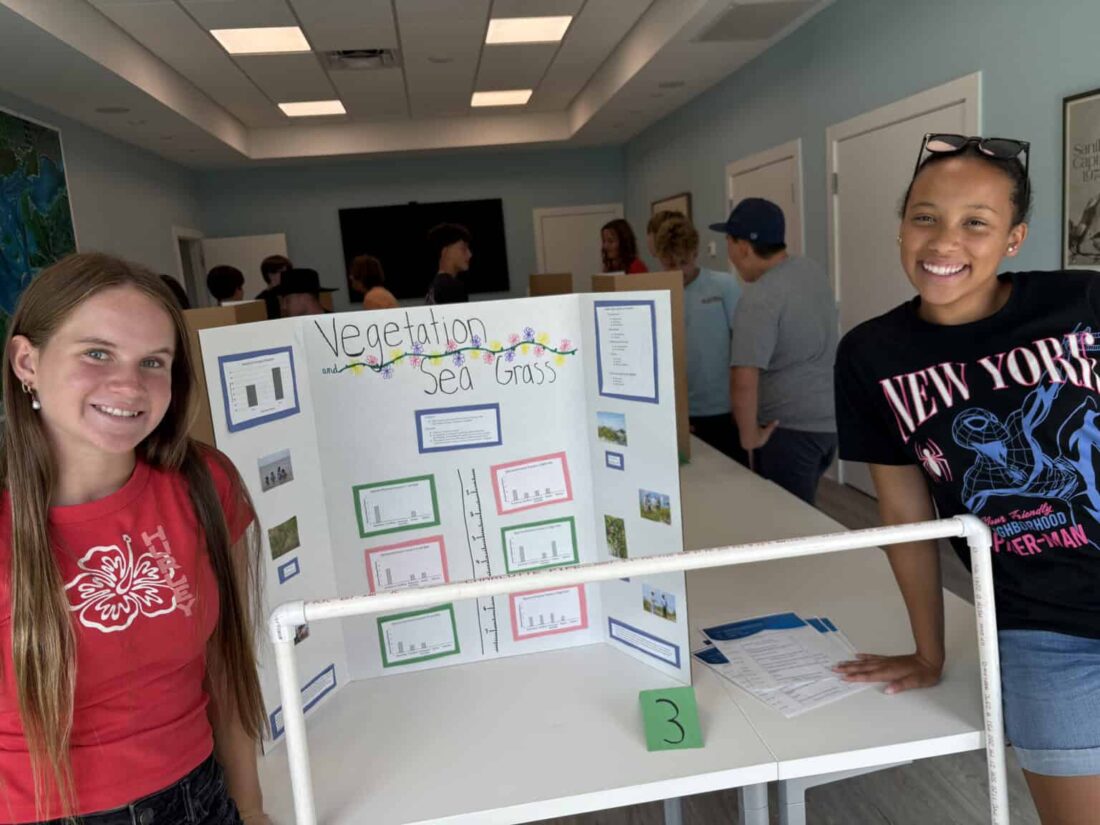
Throughout the week, students practiced the skills that scientists use every day and spent time with experts in the field.