

Rain gardens
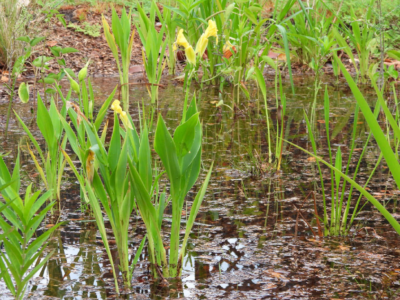
Do you have water puddles on your yard? You may have the beginnings of a beautiful rain garden!
A rain garden is a garden of native plants planted in a depression which is usually formed on a natural slope. It is designed to hold and soak in rainwater runoff that flows from roofs, driveways, sidewalks or lawns. Rain gardens are effective in removing up to 90% of nutrients and chemicals and up to 80% of sediment from the rainwater runoff. The Environmental Protection Agency (EPA) estimates that pollutants carried by rainwater runoff account for 70% of all water pollution.
Compared to a conventional lawn, rain gardens allow for 30% more water to soak into the ground. It’s different than a water garden, pond, wetland or seasonal wetland. Rain gardens are dry most of the time and typically hold water only during and after a rain event, typically 12-48 hours maximum. A rain garden is a best management practice for storm water.
A rain garden can be a simple solution for a low area of your yard that already collects rainwater. As rainwater collects in the garden, it slowly seeps into the soil, replenishing groundwater and reducing the volume of polluted stormwater entering our waterways. This natural filtration system helps reduce pollution, erosion, and flooding, while creating a thriving habitat for birds, butterflies, and beneficial insects.
BENEFITS OF RAIN GARDENS
– Reduced flooding: By absorbing rainwater, rain gardens help to alleviate flooding, especially during heavy rainfall events. This is crucial for a low-lying island like Sanibel.
– Improved water quality: Rain gardens act as nature’s filters, removing pollutants such as fertilizers, pesticides, and oil from stormwater runoff before it reaches the Gulf. This helps protect our precious marine ecosystems.
– Reduced erosion: By slowing down the flow of water, rain gardens help prevent soil erosion and protect our shorelines.
– Groundwater recharge: Rain gardens replenish groundwater supplies, which is essential for maintaining our drinking water quality and supporting local vegetation.
– Habitat for wildlife: Native plants in rain gardens provide food and shelter for a variety of birds, butterflies, and beneficial insects, enhancing biodiversity.
– Aesthetic appeal: Rain gardens can be designed to complement any landscape style, adding beauty and interest to your outdoor space.
START WITH A BIT OF PLANNING
– Pick a site for your garden that tends to collect rainwater or where runoff from your driveway or downspout can be diverted into it.
– If your rain garden is fed by downspouts, make sure that it is at least 10 feet away from foundations, decks, privacy fences, and underground utilities.
– If you need to dig, call 811 a week or so in advance so that the utilities companies can come out to your yard to flag where all your utilities are located. There is no charge for the service.
– Remove any sod and weeds from the area.
– Select a mix of native plants that do not mind getting “wet feet” but that can tolerate long periods of dry weather. There are many that will die if they are kept too wet or too dry for extended periods. Using different types of native plants will create a complete and cohesive look that will provide year-round interest and provide a varied habitat for wildlife.
– Allocate time to periodically water the plants during dry spells, until they get established, and make sure to apply 2-3 inches of mulch annually to help keep the moisture and reduce weeds.
Two rain gardens were restored by the city of Sanibel, in partnership with the University of Florida’s (UF) Institute of Food and Agricultural Sciences (IFAS) Master Gardeners Program. These planting areas, generously sponsored by a grant through the Florida Wildflower Foundation, were selected due to their ability to improve water quality, reduce stormwater runoff, and replace wildlife habitat resources. To view the restored rain gardens, visit City Hall at 800 Dunlop Road, Sanibel.
For native plants that tolerate wet to dry conditions, review the city’s Horticulturally Available Native Plant List at https://www.mysanibel.com/DocumentCenter/View/956/Sanibel-Hort-Aval-Plants-List?bidId=.
For more information or questions, call the Natural Resources Department at 239-472-3700.
Go native with the right help!
The Sanibel Vegetation Committee wrote this article in cooperation with the city of Sanibel’s Natural Resources Department. For more information, including to read other articles in the series, visit https://www.mysanibel.com/491/Vegetation-Committee-Articles.