

Giant ameiva documented for first time
The Sanibel-Captiva Conservation Foundation (SCCF) reported that exotic lizards are well documented as arriving on the island as stowaways in plant deliveries from Florida’s east coast nurseries, where the exotic lizard species are common in mulch, sod or dirt deliveries.
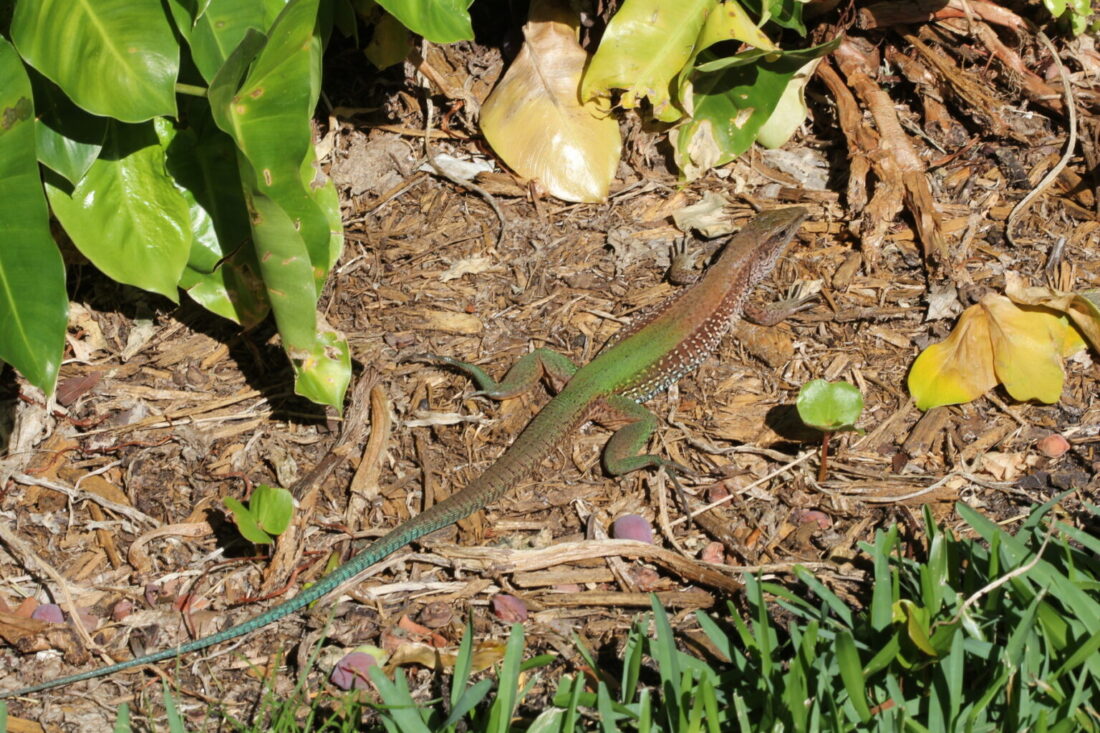
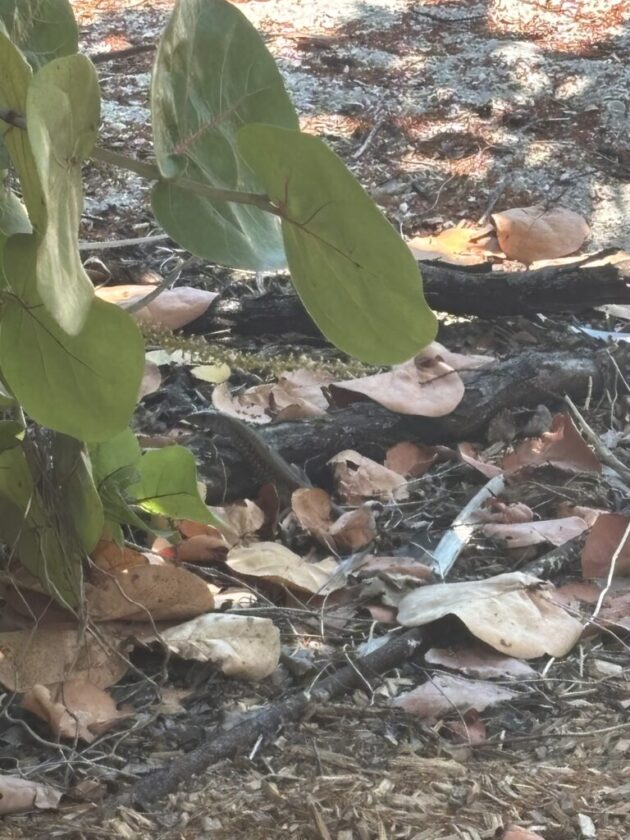
Staff at the SCCF’s Sanibel Sea School noticed a different-looking lizard scurrying around and sent a picture to the Wildlife & Habitat Management staff for verification. According to the SCCF on May 5, its team identified it as an exotic and invasive giant ameiva (Ameiva ameiva), belonging to the family Teiidae.
“This is now our 13th exotic lizard species to be found on the island. Staff will be trying to capture this lizard in case it is a lone animal,” Wildlife & Habitat Management Director Chris Lechowicz said.
The giant ameiva is in the same family as the native six-lined racerunner (Aspidoscelis sexlineatus), which is found in uplands and dune vegetation on the beach.
“There are many similarities between these two species, such as body shape, terrestrial or ground-dwelling behavior, and diet,” he said.
However, the giant ameiva is much larger and can grow up to 18-20 inches, whereas six-lined racerunners are typically 6-10 inches. Both primarily eat terrestrial arthropods such as insects and other similar prey; however, due to the size of ameivas, they have also been known to eat other lizards, including anoles, geckos and skinks, as well as some plant matter.
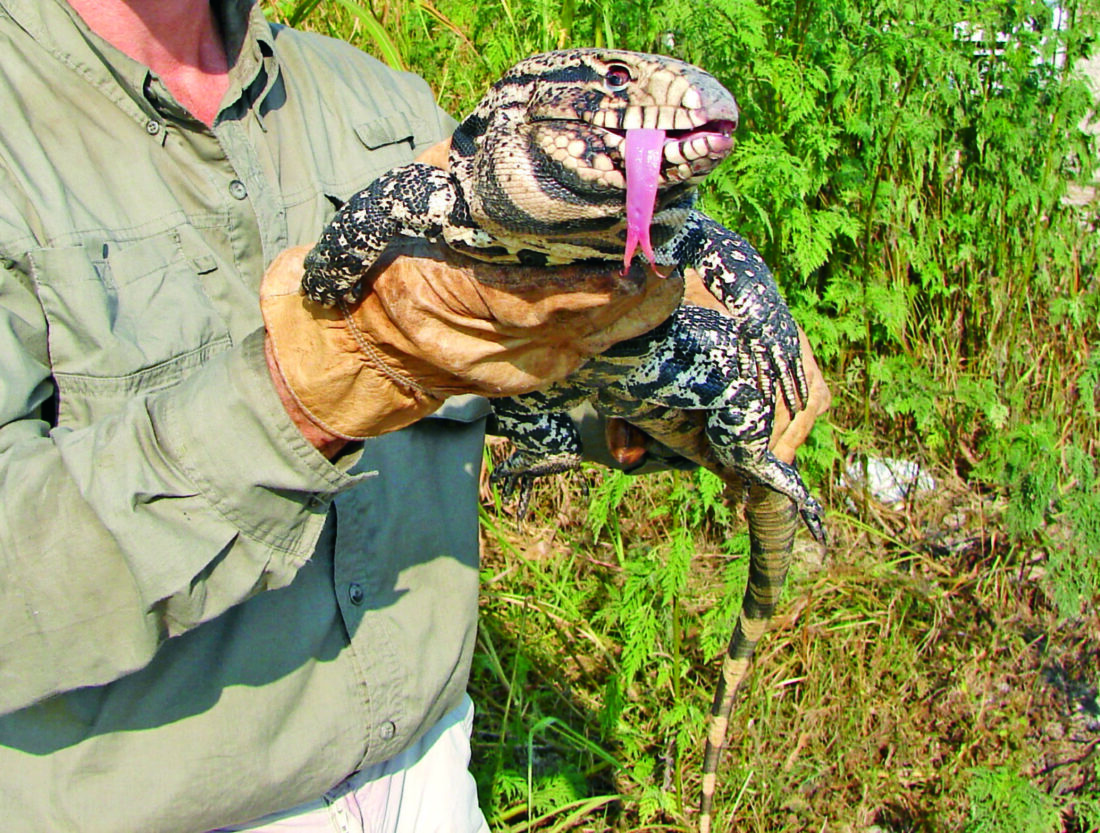
The SCCF also noted that another exotic lizard from the same taxonomic family is expected to have impacts in Florida. Not on or near Sanibel yet, the Argentine black and white tegu (Salvator merianae) is a threat to ground-nesting birds, their eggs and other smaller prey as it grows very large, 3-4 feet.
INVASIVE EXOTICS POSE SERIOUS THREAT
In modern times, the spread of invasive, exotic species is rampant, especially in warmer climates. It is largely due to how quickly and easily materials, plants, animals and people move or can be moved around the world.
“Hitchhikers in cargo shipments from other countries, stowaways on cars on family vacations, and even intentional releases are all part of the reason invasive exotic species are at the forefront of threats to native communities,” Lechowicz said.
Exotic lizards are among the most successful taxa in the Florida peninsula due to the low number of native species found in the state. Wildlife diversity — especially among reptiles — tends to increase moving south as the average yearly temperatures increase.
The Florida peninsula somewhat mimics an island because it is surrounded by water on three sides, making natural emigration into the state by terrestrial species very difficult.
Wildlife, such as lizards, can only really invade from the north, where lizard diversity is relatively low. It leaves many unused niches and lowly populated habitats throughout most of the state.
“This is the perfect formula for invasive and exotic lizards that may find their way here by anthropomorphic means,” he said. “These lizards and other animals see the peninsula as an open frontier with sparse competition with other similar species.”
REPORT SIGHTINGS OF GIANT AMEIVAS
As of May 5, the SCCF had not verified whether giant ameivas are established and breeding on the island, but it is certainly possible, as they are found in several places in southwest Florida. Only the one sighting had been verified.
If you see this lizard on Sanibel or Captiva, photograph it and send it to clechowicz@sccf.org