

First chick documented in three decades
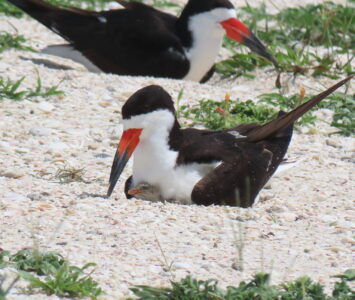
The Sanibel-Captiva Conservation Foundation (SCCF) reported that the 2026 nesting season has kept its shorebird team and dedicated volunteers busy across Sanibel and surrounding coastal sites.
Since nesting season began in February, they have monitored dozens of nesting attempts and broods across multiple beaches, mudflats and the Sanibel Causeway Islands by snowy plovers, Wilson’s plovers, least terns, black skimmers, willets and black-necked stilts. The causeway colony has become a critical refuge, with 81 least tern nests and 15 black skimmer nests documented as of June 17.
“In an exciting milestone, the first black skimmer chick has hatched at the causeway since the early 1990s — the first successful nesting record we have been able to confirm in more than three decades,” SCCF shorebird biologist Audrey Albrecht said.
On Sanibel, snowy plovers successfully hatched four nests and fledged four chicks as of June 17, with additional nests still active despite challenges from predators, storms and other natural pressures.
The SCCF reported that least terns and black skimmers have faced especially challenging conditions at several Sanibel colonies, where repeated coyote depredation has reduced nesting success and caused birds to shift to other locations.
“Thanks to funds quickly raised earlier this month, we were able to provide supplies so the Hammerheads could build shelters for the black skimmers,” she said. “We are also grateful for our volunteers who will be coming tomorrow to paint those shelters so we can get them out into the nesting areas soon.”
Beyond Sanibel, the team continues to support nesting birds — working with partners throughout the region to monitor Wilson’s plovers, black-necked stilts and other coastal species on North Captiva and at the Estero Bay Preserve State Park, Bunche Beach and Bunche Salt Flats.
“Each season brings new challenges, but the dedication of our staff and volunteers allows us to protect these vulnerable birds across a wide and ever-changing landscape,” Albrecht said.
To reach SANIBEL-CAPTIVA CONSERVATION FOUNDATION, please email