

CROW: Bobcat has clear lungs, thriving in recovery
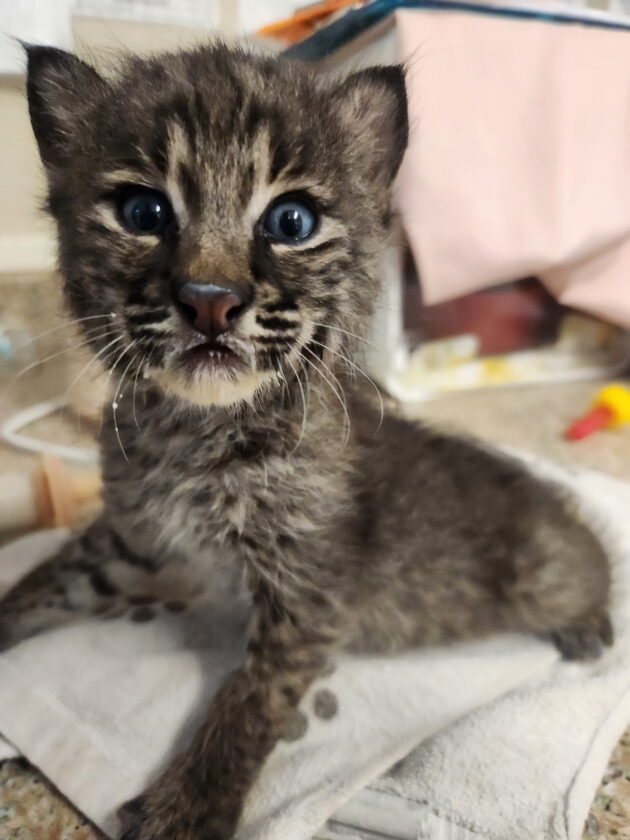
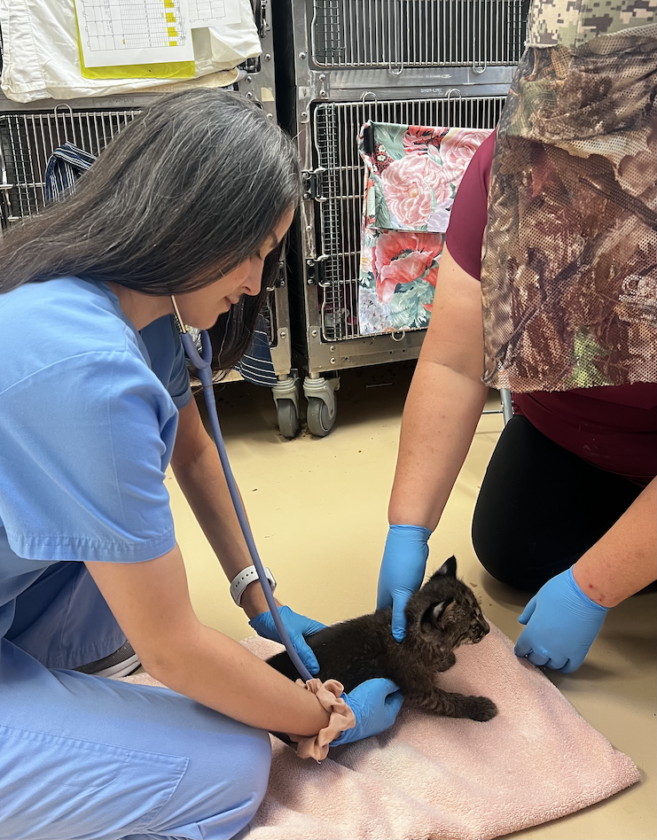
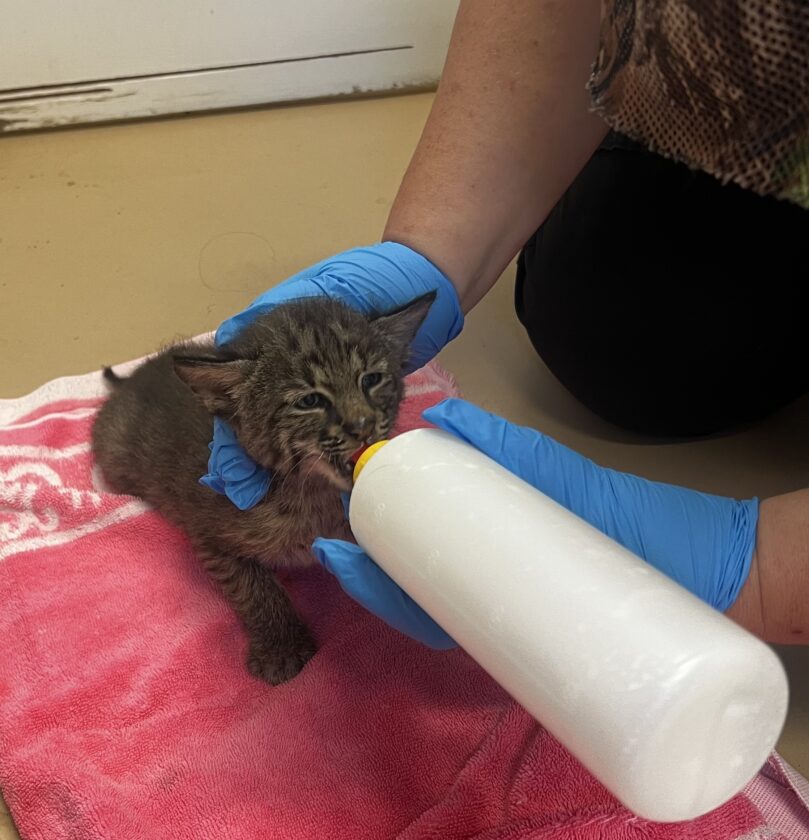
The Clinic for the Rehabilitation of Wildlife (CROW) on Sanibel reported that bobcat kittens need around-the-clock care. Kittens who have been orphaned because of a fire need even more.
As of today, June 19, a now 7-9-week-old one is healing and learning how to be a bobcat at CROW after the traumatic experience of being orphaned alone in a brush fire.
“The bobcat kitten is progressing very well following her rescue. She’s gaining weight, her lungs are clear, and she has shown no signs of ongoing complications from smoke exposure,” Research & Medical Director Dr. Jessica Comolli, who is a board-certified specialist in zoological medicine, said. “While we continue to monitor her closely, things are looking very promising for her future.”
In late May, Bayshore Fire Protection and Rescue Service District volunteer firefighter Julian Roman-Kulwicki came across the kitten while working a fire in Charlotte County. He saw her crying and crawling out of a pile of ashes, so he affectionately named her “Ash.”
Roman-Kulwicki’s friend, Kaitlyn Doherty, grew up in Florida helping rescue animals and bringing them to CROW. So he turned to her for help.
“I was super worried for the bobcat,” Doherty, who brought the kitten to CROW, said.
The bobcat kitten arrived weighing 600 grams. After a few weeks of intensive care, the kitten has more than doubled in size, weighing more than 1,250 grams. As of today, June 19, she is getting three bottle feedings a day and is being introduced to solid food.
But helping the bobcat kitten gain weight is only one part of rehabilitation, CROW noted. Its wildlife staff must ensure that the bobcat retains the natural behaviors needed for life in the wild.
To minimize human imprinting, caregivers wear face coverings while handling bobcat kittens and limit interaction whenever possible. It helps prevent the bobcats from becoming accustomed to people as they recover and prepare for a return to the wild.
“I’m happy she’s in the best care she could possibly be in and super thankful for CROW,” Roman-Kulwicki said.
CROW reported that its medical and rehabilitation teams will continue her care until she is ready to be transferred to a facility that will raise her with other bobcat kittens. Once ready, the goal remains to release her back into the wild.
If you find a wild animal in need of help, call CROW at 239-472-3644, ext. 222.
Located at 3883 Sanibel-Captiva Road, Sanibel, its wildlife hospital is open seven days a week.
For a list of drop-off veterinary partners in Fort Myers and Cape Coral, visit https://crowclinic.org/found-animal.
For more information about CROW, visit www.crowclinic.org.