

What to do if you see Peter’s rock agamas
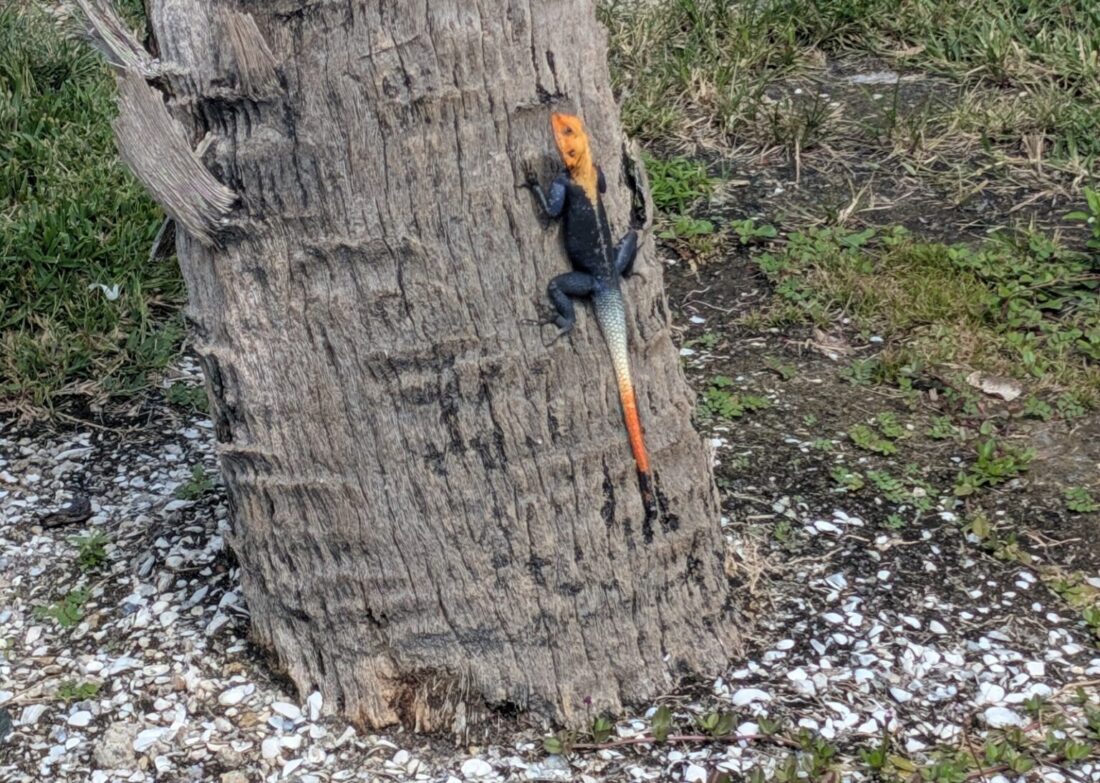
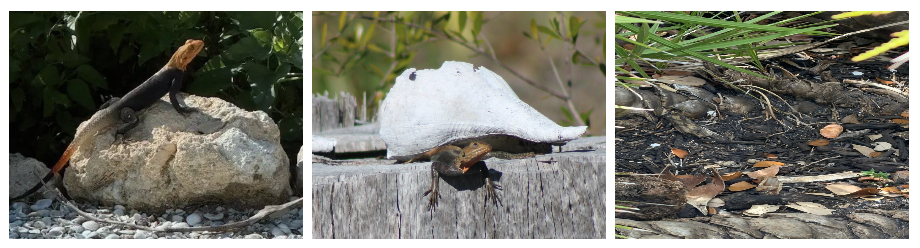
The Sanibel-Captiva Conservation Foundation (SCCF) reported that since Hurricane Ian, Peter’s rock agamas have become more prevalent on Sanibel.
An invasive species from sub-Saharan Africa, it was confined to two small areas on the island and did not appear to be expanding its range rapidly since it was first documented in 2006. However, the quick-moving, ground-dwelling lizard seemed to have exploded in numbers within a year of Ian.
The SCCF reported that it asked for sightings two years ago and received numerous reports of the species throughout the island. Recently, people have been reaching out to ask whether they should trap them or have them removed.
“It’s perfectly legal to trap and kill them in Florida — if they are a nuisance,” Wildlife & Habitat Management Director Chris Lechowicz said. “They can be considered a nuisance because they dig holes beneath structures and likely prey on some native vertebrate species, mostly lizards and snakes.”
HOW DISTURBANCES IMPACT INVASIVES
The SCCF reported that agamas are one of several invasive species that have become more prevalent across the island since Ian.
“Invasive exotic plant and animal species tend to respond positively to disturbances that alter natural habitats,” he said.
Events such as land clearing for development, the creation of artificial water bodies and structures to maintain these water storage areas, and even hurricane-induced major storm surges — overwashes — that alter the landscape are precursors to exotic invasions.
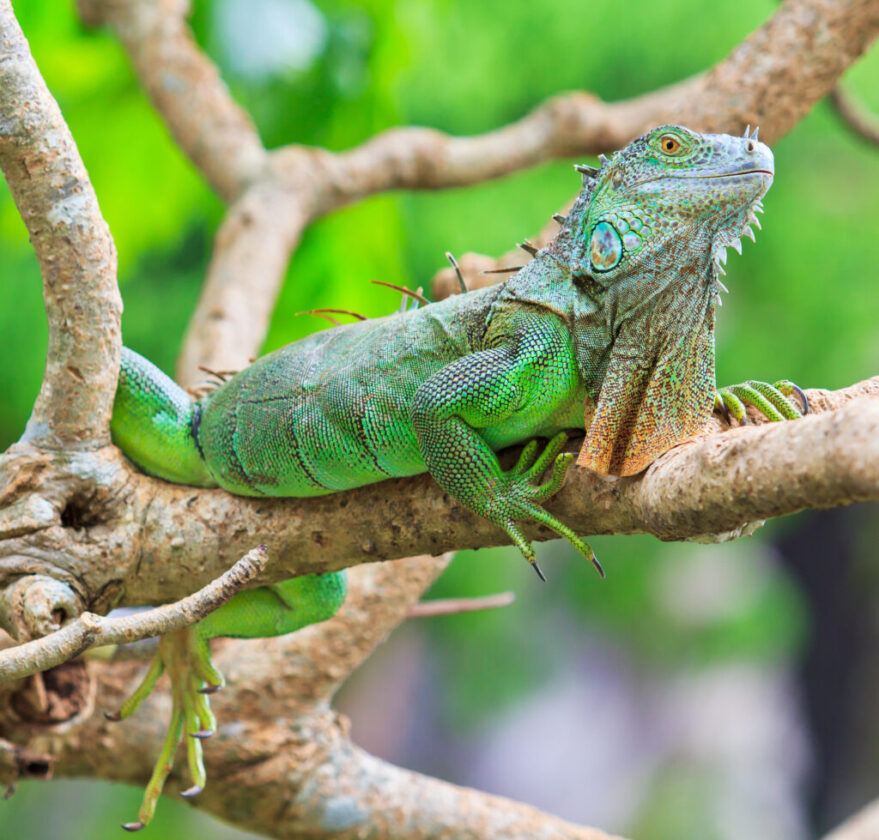
The most obvious species that has been impacted by these disturbances is the green iguana, whose range was mostly limited to the eastern end of the island.
“After Ian, green iguanas quickly spread west on the island,” Lechowicz said. “Today, they can be found island-wide as many habitats on the island have changed.”
The city of Sanibel has an Exotic Lizard Management Program that was approved in 2007. It allows citizens to request the removal of nuisance iguanas.
The SCCF reported that less is known about how to deal with Peter’s rock agamas, however, which were first documented in Florida in 1976 due to releases from the pet trade. Today, the invasive species has populations on the east and west coasts of South Florida, as well as a few counties in central Florida.
They are medium-sized lizards (8-12 inches), with males being bright blue with an orange head and partial tail and females primarily brown, though they rarely exceed 5 inches. They are primarily invertebrate predators — eating mostly insects — but can also eat reptiles, such as small lizards and snakes, as well as very small birds and mammals, though uncommon.
PETER’S ROCK AGAMAS ON ISLAND
The SCCF reported that they were first discovered on the west end of Sanibel in 2006, shortly after the replantings following Hurricane Charley.
“Several exotic lizards were unfortunately brought to the island and became established from the massive replanting of Captiva and the west end of Sanibel,” he said. “Most of the trees and shrubs brought in were from East Coast nurseries, where these lizards are well established, and were accidentally transported to the island in plant shipments.”
Agamas are considered an exotic, invasive species in Florida, and the Florida Fish and Wildlife Conservation Commission (FWC) says they are often easy to see but difficult to catch.
They are not protected by the city but are protected by Florida’s anti-cruelty laws. They can be humanely killed, as described by FWC.
For questions, contact the SCCF at info@sccf.org.
To report sightings and photos of Peter’s rock agamas, visit https://survey123.arcgis.com/share/b80b4626d9e64a15ab3faa1cf04708eb.