

Why you need to be firewise on Sanibel
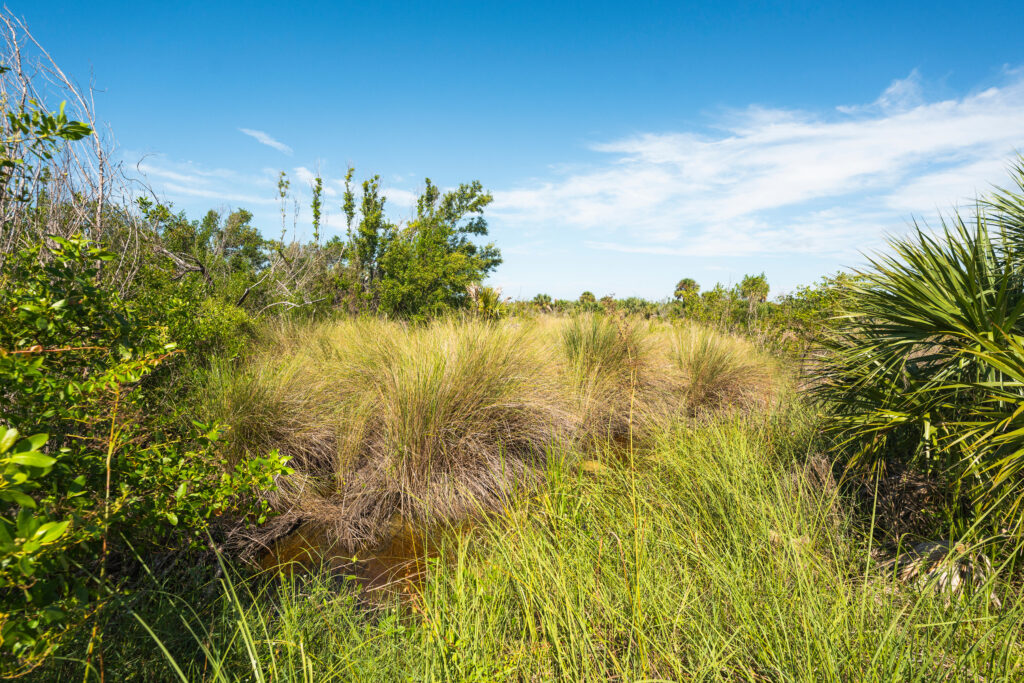
The Sanibel-Captiva Conservation Foundation (SCCF) reported that much of Sanibel’s interior habitats are fire adapted, meaning that the natural ecosystem is accustomed to periodic fire to keep the habitat in balance. This is part of the reason that prescribed fires — also known as controlled burns — are conducted when possible.
Controlled burns are done after the dry season ends to mimic the natural fire regime that kept the habitat useable for native island wildlife and to reduce fuel created by dead vegetation in case of wildfires.
“Native wildlife diversity in southern habitats has been shown to decrease with the absence of fire,” SCCF Wildlife & Habitat Management Director Chris Lechowicz said. “On Sanibel, areas that were historically open-canopy plant communities with sporadic tree cover and ample native, salt tolerant grasses and groundcover show decreased native wildlife diversity when allowed to succeed to dense hardwood tropical hammocks or buttonwood forest.”
A common question about prescribed fires is how native wildlife fares or survives them. Fortunately, native wildlife is well-adapted for periodic fire and has several mechanisms to survive the events.
WILDLIFE SURVIVAL INCLUDES SEEKING OUT BURROWS
One of the most important species that helps other species survive in a fire-dependent system is the gopher tortoise. Gopher tortoises are a keystone species that provide habitat for other wildlife through the burrows they create.
Many wildlife species use gopher tortoise burrows as shelter from the elements, safety from predators and to escape wildfires. Conservation organizations on the island such as SCCF, the J.N. “Ding” Darling National Wildlife Refuge and the city of Sanibel strive to keep the natural fire regime a part of their management plans, but some areas just cannot be burned anymore.
“The inability to burn in some areas is due to the proximity to developed areas and/or habitat succession to hardwood forests. Today, controlled burns on the island typically occur between the C.R. Johnston Preserve on Casa Ybel, just east of Algier’s, to Legion Curve on Sanibel-Captiva Road on selected parcels only,” he said.
BEING FIREWISE WHEN LIVING IN ISLAND INTERIOR
When living in a fire-adapted ecosystem, such as the interior of the island, it is important to create a defensible space around your home to reduce wildfire risk. It is recommended that you keep fire-adapted plants at least 30 feet from your home. Also, you should try to use low-flammability plants.
Be mindful of burn bans issued by the Florida Department of Agriculture and Consumer Services — formerly the Florida Fire Service — such as the current ban in Lee County and in 58% of Florida counties. The agency can restrict prescribed fires, pile burns and campfires due to the drought index. Controlled burns on Sanibel typically occur toward the end of the dry season, from May to July.
For information about upcoming controlled burns, sign up for the city’s announcements at https://www.mysanibel.com/408/Sign-Up-For-City-Announcements.