

SCCF begins eastern indigo snake surveys
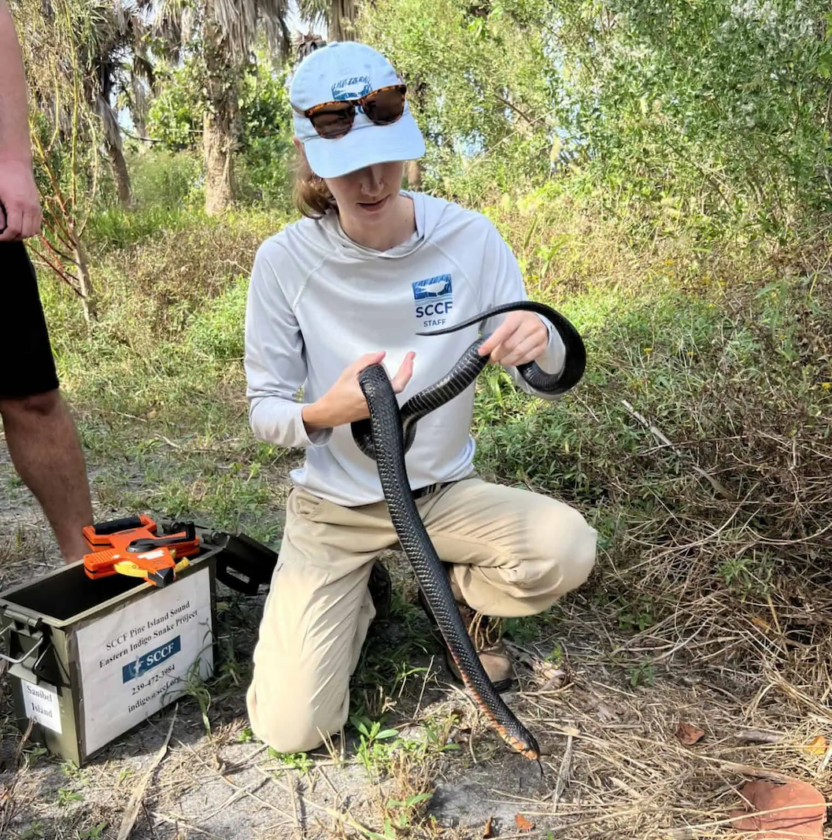
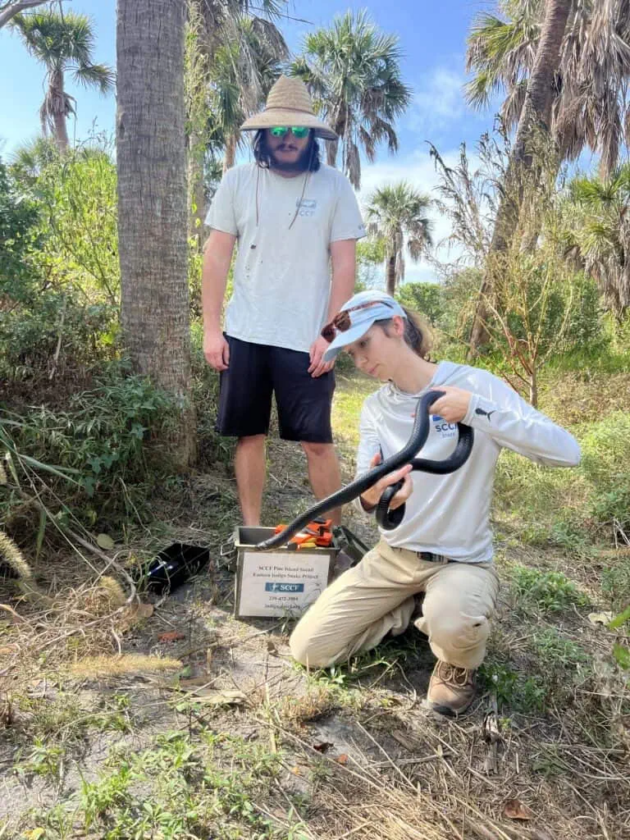
Sanibel-Captiva Conservation Foundation (SCCF) biologists and permittees began annual eastern indigo snake (Drymarchon couperi) surveys in November as cold fronts triggered breeding activity.
The SCCF reported that the wintertime mating season is considered a major factor in their decline across their limited range, which includes south Georgia and Florida.
“These state and federally protected snakes cover more ground while looking for mates, while road use from winter tourists and part-time residents is at its peak,” Wildlife & Habitat Management Director Chris Lechowicz. “This leads to high occurrences of road mortality and is the main reason they are now extirpated from Sanibel and Captiva islands.”
The last documented sighting on Sanibel was in 1999. However, eastern indigo snakes still exist on other islands in the Pine Island Sound, in relatively small numbers, so every snake counts toward sustaining the mini populations.
In 2012, the SCCF started the Pine Island Sound Eastern Indigo Snake Project to monitor populations and educate residents and visitors on the importance of the species in the native ecosystems.
“As part of our research, we measure and mark them, as well as gather a genetic sample for other studies,” he said. “By being able to differentiate individual snakes, information about population size, longevity, sex ratios and movements can be documented.”
Eastern indigo snakes have been a protected species since the 1970s. They were heavily collected at that time for the pet trade at the time of listing, but the main factors that led to their mostly catastrophic reductions in recent times were the bisecting of large habitats with roads.
“Indigo snake researchers often mention how once a road is built through their habitat, the demise of that eastern indigo snake population has begun,” Lechowicz said. “This threat is still increasing quickly throughout Florida with all the rapid development.”
The gentle giants, averaging 5-7 feet in length, are shiny black with red under the chin and neck in many specimens. They are much thicker than the common black racer (Coluber constrictor).
Eastern indigo snakes are considered docile toward people and eat a variety of prey, with other snakes comprising the largest portion of their diet, including venomous snakes.
They are not constricting snakes; they simply overpower their prey and eat it. Their scientific name Drymarchon means “king of the forest,” as they are the largest native snake found in the United States.
If you see a snake that you think may be an eastern indigo snake, take a picture and email it to indigo@sccf.org.