

Refuge provides update on wildlife
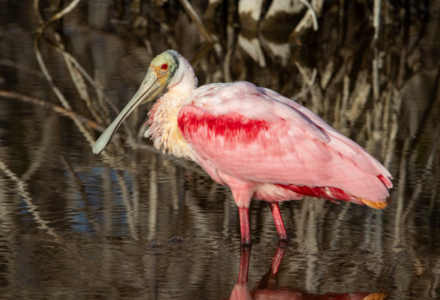
The J.N. “Ding” Darling National Wildlife Refuge reported that roseate spoonbills are not born with their bubblegum bearing. When they first emerge from their whitish to pale green eggs with brown spots, the hatchlings are covered in a soft, white, feathery down. A spoonbill’s diet consists partly of crustaceans that contain a pink pigment referred to as a “carotenoid.” As juvenile spoonbills begin to consume the diet, the pigment pinkens their feathers, giving them their iconic rosy plumage. In addition to their white bodies, juveniles have fluffy white feathers adorning their heads. As a spoonbill ages, its feathers fall off to reveal the bald, scaly head noticeable in adults. The metamorphosis into adulthood is completed with a chromatic change in a spoonbill’s eyes, as they shift color from a chocolate brown to a deep scarlet as a spoonbill reaches maturity. The J.N. “Ding” Darling National Wildlife Refuge is at 1 Wildlife Drive, Sanibel.