

Tale of the black-bellied whistling duck
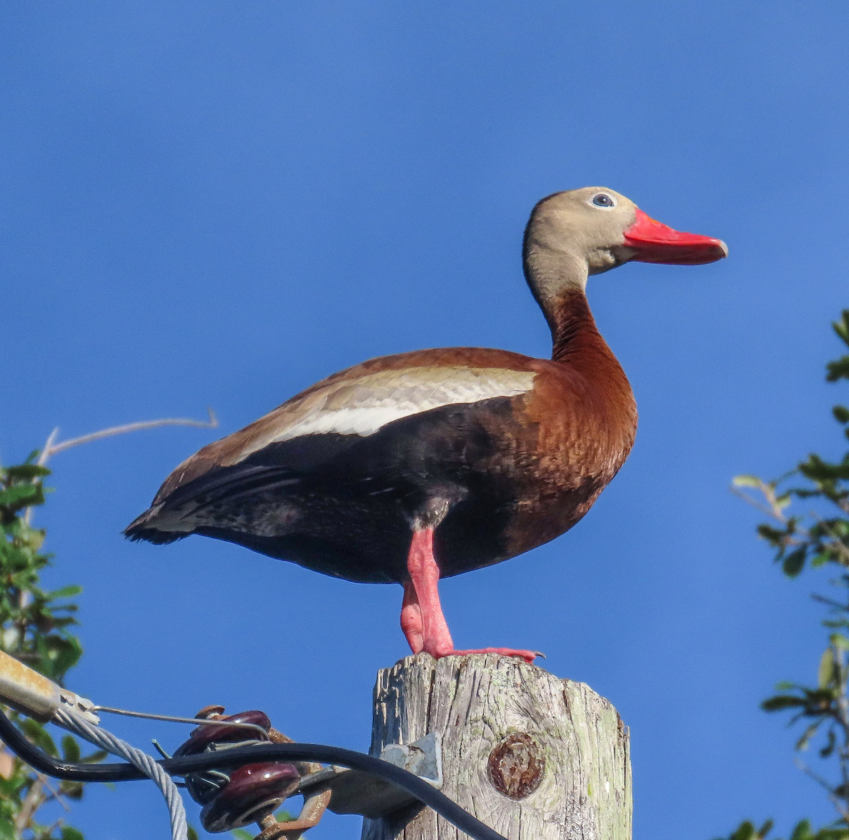
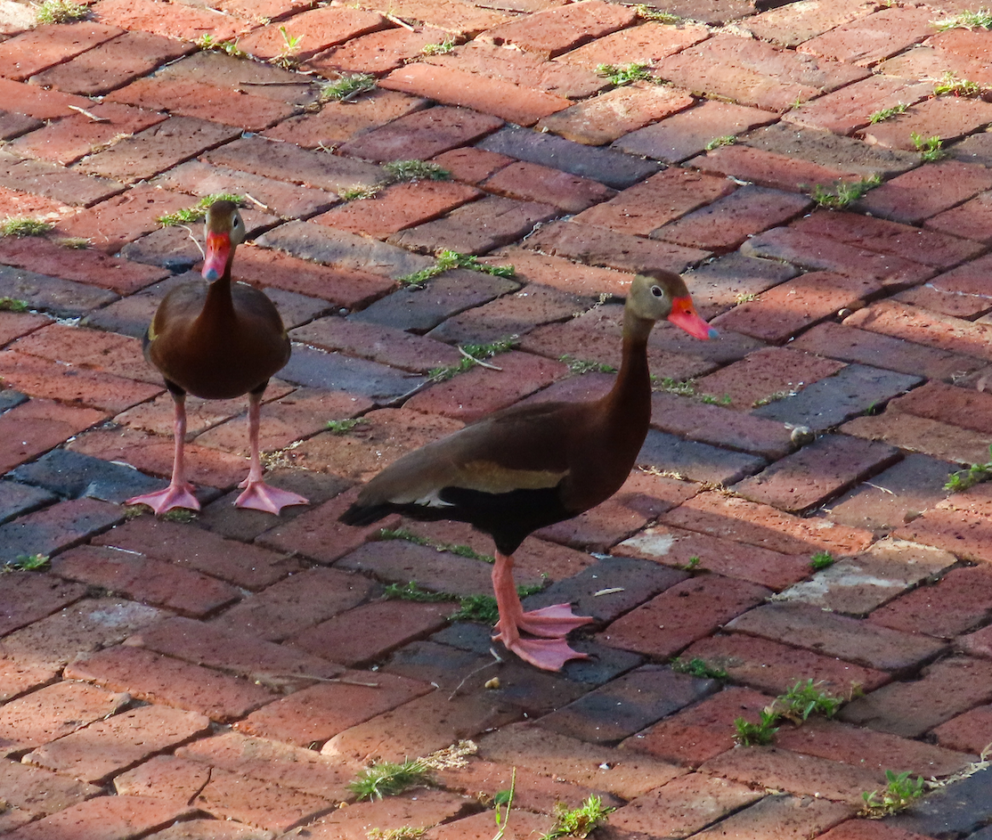
Sanibel Island appears to have a new resident. Not surprisingly, it’s a bird. Specifically, it’s the black-bellied whistling duck (Dendrocygna autumnalis) and it appears to have landed on the island in the fall of 2024. A species that is currently rated as least concern by the International Union for Conservation of Nature (IUCN), this goose-like bird is one of few species in the world that is currently expanding both its range and its population. An attractive waterfowl, with its bright orange beak and pinkish-colored legs, it is an easy duck to identify, even in flight. These ducks are monomorphic, which means both the male and the female look virtually identical.
Originally from Mexico as well as South and Central America, this duck is unique in any number of ways. In Mexico they call it the “Mexican squealer” because of its unusual call, which is often described as a high-pitched whistle or a series of squeaks. Another appropriate nickname is “tree ducks” owing to their ability to perch in trees, on power lines, and on rooftops. Note that our much more common Florida mottled ducks would never be found on any of these roosts. In the wild their average lifespan is six to eight years, although captive ducks can live as long as a decade. For the most part they are non-migratory, although they will travel considerable distances to avoid the worst of winter. They have now been spotted as far north as Arkansas along the Mississippi River valley.
The other fascinating aspect of this bird is that it’s very gregarious. I have a pair nesting near me, and they have virtually no flight response when you approach them. To put it in simple terms, as wild birds they are extremely friendly. They are presently thriving in urban, suburban and exurban settings, not unlike the ungainly Muscovy ducks that can be found throughout Lee County and Southwest Florida. Unlike most ducks, whistling ducks mate for life and prefer to nest in tree hollows or dead palm trees.
It is currently legal to hunt these ducks, although taxonomically they are more closely related to geese. They, along with a related bird, the fulvous whistling duck (Dendrocygna bicolor), are generally limited to one bird of the daily limit of six. Hunts generally occur in the winter. They are regarded by hunters as excellent table fare, but it would kill me to ever shoot one.
It is interesting to find a large bird expanding its range as rapidly as the black-bellied whistling duck. Only a few decades ago they were an extremely rare sighting in Florida. The first nesting pair was noted in a Hardee County phosphate mine in 1990. Like several birds before it, such as the invasive Eurasian-collared dove, English sparrow and starling, it has spread, and continues to spread, like it has wings. The black-bellied whistling duck is here to stay and a welcome addition to our fauna. A striking, beautiful duck that whistles as it flies overhead and thrives in our suburban world. Who could ask for anything more?
Charles Sobczak is the author of “Six Mornings on Sanibel,” as well as several nature guides, including “The Living Gulf Coast — A Nature Guide to Southwest Florida.”