

Sugar industry lawsuit affecting Everglades restoration fails


The Everglades Law Center reported that environmental and civic groups, state and local governments, and advocates for Everglades restoration celebrated a major legal victory in federal court on March 25.
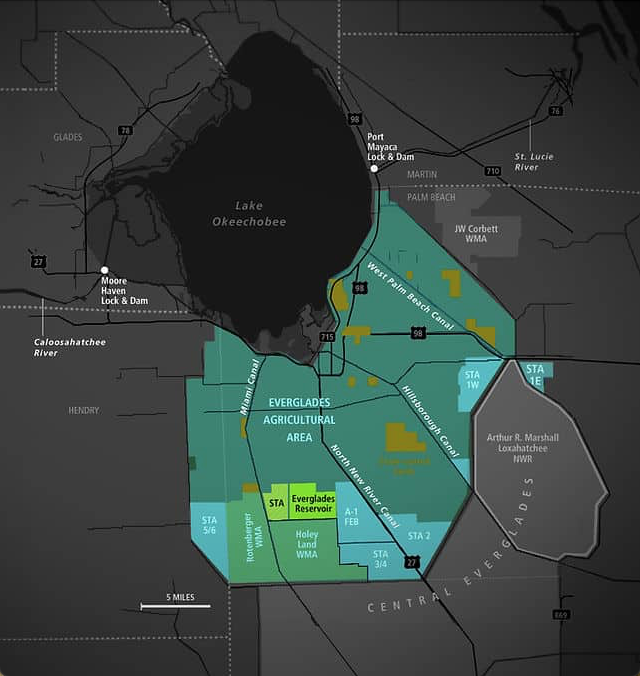
The 11th Circuit Court of Appeals ruled in favor of the U.S. Army Corps of Engineers, affirming its approval of the Everglades Agricultural Area (EAA) Reservoir and Stormwater Treatment Area Project. The center added that the decision rejects the sugar industry’s attempt to delay or undermine the progress of Everglades restoration.
“Today’s decision ensures that the EAA Reservoir will fulfill its intended purpose — restoring water flows to the Everglades and protecting Florida’s coastal communities,” Everglades Law Center Policy Director Lisa Interlandi said in a statement.
Initiated in 2021 by Okeelanta Corporation, United States Sugar Corporation and the Sugar Cane Growers Cooperative of Florida, the challenge argued that the Corps violated the Savings Clause of the Water Resources Development Act of 2000 (WRDA 2000). The center reported the clause ensures Everglades restoration projects do not eliminate or transfer existing water supplies unless comparable sources are made available. The sugar industry contended that the EAA Reservoir Project should replace all water lost to it due to operational changes made in 2008 to the Lake Okeechobee regulation schedule — changes made to address public safety concerns unrelated to Everglades restoration.
“The court’s decision reaffirms the intent of Congress in passing WRDA 2000,” Everglades Law Center General Counsel Ansley Samson said in a statement. “The Savings Clause was never meant to serve as an insurance policy for the sugar industry at the expense of Everglades restoration.”
SIGNIFICANCE OF RULING
The decision confirms that the sugar industry’s interpretation of the Savings Clause — which would have required the Corps to offset all water supply reductions since 2000 — is inconsistent with the law. The court affirmed that the clause applies only to water lost as a direct result of implementing Comprehensive Everglades Restoration Plan (CERP) projects, not to unrelated operational changes such as those made to protect public safety after Hurricane Katrina.
STAKES FOR EVERGLADES RESTORATION
The EAA Reservoir Project is a cornerstone of CERP, designed to store and deliver freshwater to the Everglades and Florida Bay, while reducing harmful discharges to coastal estuaries. If the sugar industry’s claims had prevailed, the primary function of the EAA Reservoir could have been altered to prioritize agricultural water supply, undermining its environmental benefits and threatening the progress of Everglades restoration.
Environmental groups warned that the outcome would have jeopardized decades of restoration efforts, potentially diverting billions of dollars away from critical projects while leaving little water for the environment.
COALITION STANDS BEHIND RESTORATION
The Everglades Amici, represented by the Everglades Law Center, played a vital role in defending the case. The coalition includes environmental, civic and governmental organizations, including Captains for Clean Water, city of Lake Worth Beach, city of Sanibel, city of Stuart, Florida Bay Forever, Florida Keys Fishing Guides Association, Islamorada, Islamorada Chamber of Commerce, SanCap Chamber of Commerce, Sanibel-Captiva Conservation Foundation (SCCF), The Everglades Foundation and Village of Islands. Their Amicus Curiae brief highlighted the environmental harm caused by current water management practices and the critical role of the EAA Reservoir Project in reversing the impacts.
“This is a huge win for America’s Everglades and our coastal estuaries that are dependent on the EAA Reservoir to provide restorative flows to the River of Grass and meaningful relief from damaging flows from Lake Okeechobee,” SCCF Chief Executive Officer James Evans said in a statement. “Our coastal estuaries have experienced real, measurable, harm from the high-volume releases from the lake. Over the past two and half decades, the Caloosahatchee estuary and our coastal ecosystems have endured substantial impacts to seagrasses and oyster habitats and the fisheries that depend on them. These losses have also had a direct impact on our local economy. The EAA Reservoir is essential for reducing those damaging discharges to the Caloosahatchee and St. Lucie estuaries and moving that water south where it is desperately needed. This ruling will allow the Corps, the state of Florida, and other state and federal agencies to complete this project and provide the essential relief that our coastal communities are depending on.”
“Our members and businesses depend on clean water and a healthy environment,” SanCap Chamber President and Chief Executive Officer John Lai said in a statement. “This ruling ensures that the benefits of Everglades restoration will support sustainable tourism and resilient communities.”
LOOKING AHEAD
The center reported that the ruling clears the way for the Corps to continue its work on the EAA Reservoir Project and other CERP initiatives without being encumbered by unfounded claims. It also sets a critical precedent, ensuring that future restoration projects can proceed without being derailed by demands to guarantee water supplies for private interests against unrelated losses.
“For decades, the Everglades ecosystem has suffered from disrupted water flows, harming wildlife, communities and Florida’s iconic landscapes,” it added. “This victory is a pivotal step toward reversing these impacts and achieving the long-term vision of a restored Everglades.”