

Invasive Species Awareness Week: Air potato
(Editor’s note: As part of the recent National Invasive Species Awareness Week, the city of Sanibel’s Natural Resources Department shared information from the Sanibel Vegetation Committee about a few pesky plants that have made themselves comfortable on the island.)
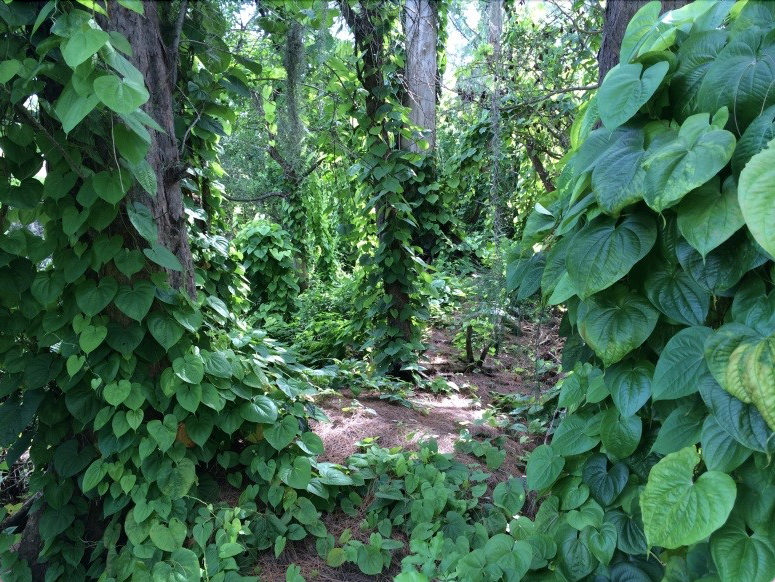
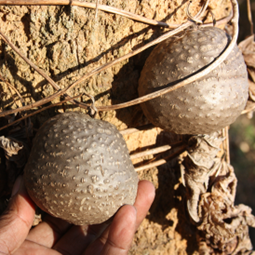
One of Florida’s most troublesome invaders is the “air potato” (Dioscorea bulbifera), a member of the family of the true yams. Air potato, like most yams, is a vine which cannot support its own weight. In order to capture sunlight, the air potato ascends by twining and climbing other plants. An air potato forms dense canopies that can shade out vegetation and cause the collapse of native plants. It can grow up to 70 feet in one season, starting from the previous season’s tubers. These tubers, also referred to as bulbils, closely resemble potatoes and grow attached to stems, appearing in mid-summer and falling to the ground in late fall when the vines die back. The potatoes lie dormant until the following spring, when they sprout and begin the cycle again.
Found in Asia, Africa and the United States, air potatoes thrive all over Florida, which of course, includes Sanibel. The city has included air potato on its list of regulated invasive, exotic plants. The plants must be removed when a property is developed, and the property must be maintained free of these invasive exotics in perpetuity.
Unfortunately, air potatoes are extremely difficult to eradicate. Herbicides do temporarily halt the growth of the vine, but require repeated applications and careful protection of desirable neighboring plants. Hand picking the potatoes and digging up the roots may slow down next year’s vines and crop tubers, but a few missed tubers can mean failure. Do not dispose of potatoes or vines in vegetative waste.
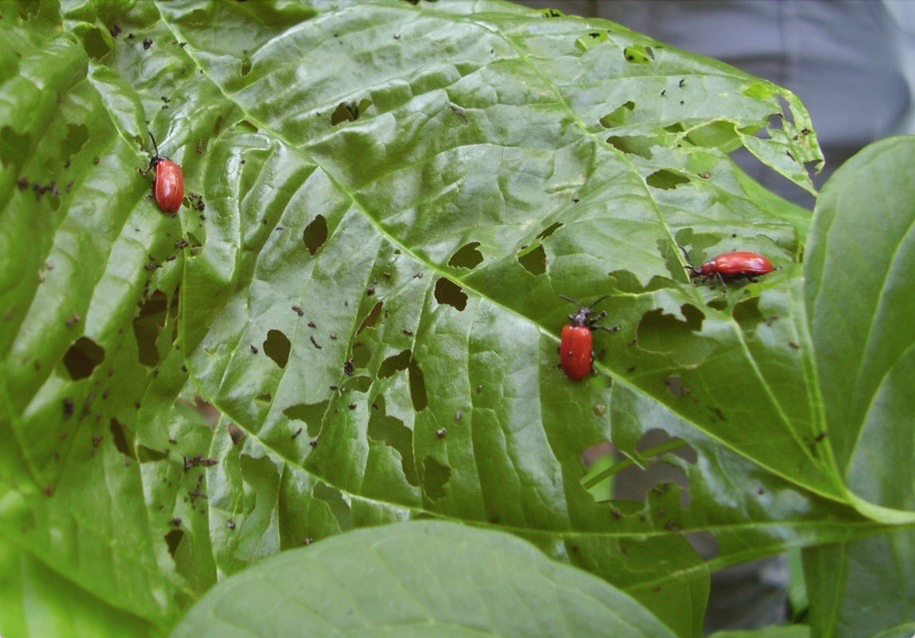
The best hope for stopping this creeping vine, which can quickly suffocate trees and bushes, appears to be a tiny red and black beetle — Lili beetle (Liloceris cheni) — that has a voracious appetite for air potato leaves. Since releasing several hundred thousand beetles, Florida has seen a significant reduction in the vines. Beetles are available free of charge to residents and municipalities from the Florida Department of Agriculture at http://bcrcl.ifas.ufl.edu/airpotatofiles/airpotatoforms.shtml.
To view the “Worst of the Worst” invasives and the city’s “The Alien Invasion” brochure, visit https://www.mysanibel.com/content/download/10568/file/The%20Alien%20Invasion%202011.pdf.
For more information, contact the city’s Natural Resources Department at 239-472-3700.