

Shell museum launches new exhibit about mangroves
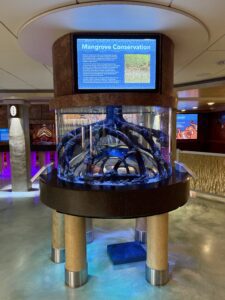
The Bailey-Matthews National Shell Museum launched a new mangrove exhibit earlier this month in its Beyond Shells Living Gallery. It is designed to facilitate an educational narrative of mangrove conservation and water quality that will be meaningful for local, visiting and school audiences.
Mangroves are tropical coastal shrubs and trees that can tolerate wave action and immersion in sea water and that thrive under a broad range of salt concentrations. Different species of mangroves are adapted to prosper in sand or mud with very low oxygen conditions. The exhibit presents a red mangrove, which is typically found at the outer fringe of mangrove forests.
“This dynamic new exhibit takes the viewer inside a beautifully re-created red mangrove ecosystem, offering a close view of the importance of mangroves to the health and conservation of our coastal environments,” Executive Director Sam Ankerson said.
Mangroves provide shelter and habitat to a diverse community of invertebrates and fish. Mollusks thrive in the ecosystems, from the muddy bottom around the trees to the roots, branches and trunk, and even under the mangrove tree’s bark.
The exhibit includes mollusks and fish that are typical to a red mangrove ecosystem, including marsh killifish, sheepshead killifish, sailfin mollies, bruised nassa snails, crown conch snails, banded tulips and true tulips. The mangrove extends over a “viewing bubble,” which enables visitors to view the diversity of animals while standing on the inside of the exhibit.
For more information, visit ShellMuseum.org.
The Bailey-Matthews National Shell Museum is at 3075 Sanibel Captiva Road, Sanibel.