

Cooperation leads conversation at 26th annual water conference
The time for finger-pointing is past – it’s time to come together.
Cooperation through common ground was the theme of the 26th annual Southwest Florida Water Resources Conference.
This year’s meeting, held Jan. 13, at Florida Gulf Coast University, sought to cultivate conversation between a multitude of different interests about the benefits of public and private partnerships in terms of water resources, management and improvements.
Much of the conversations swirled around the water quality issues of the Everglades, Lake Okeechobee, and the Caloosahatchee River, said Karen Miller, event co-chair. It was to be expected after a long year of water quality issues rising to the surface in 2016.
“We keep coming back to the same issues year after year. For all of 2016 we re-hashed those issues,” she said. “It’s time for us to start cooperating – trying to get away from the finger-pointing.”
Representatives from local, state and federal organizations spoke of success stories in public/private efforts for water. From sea level rise issues in the Keys and in Miami to habitat protection in Collier County and preservation lands in Lee County, public and private interests coming together in common ground is not a new concept.
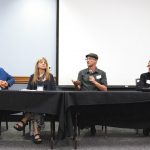
Ray Judah, former Lee County Commissioner, was invited to speak on a panel that discussed such success stories – and one of them happened right in Lee County.
He worked with the South Florida Water Management District to save a large piece of land in the county in a separate transaction.
Also, Judah was directly involved with the Conservation 20/20 effort, passed in 1996 and renewed in 2016, for the county to set aside funding for the acquisition and preservation of land to put into conservation.
“We didn’t get ousted for raising taxes,” he said. “Even back then people understood the importance of preserving land.”
Approximately 84 percent of Lee County voters approved the renewal of the 20/20 program via referendum on the November 2016 ballot.
“I hope the county commission will list to the voice of the voters, and keep up with tremendous growth pressures,” Judah said.
But the issue of the Everglades and storing water to the south was contentious at the conference as the conversation shifted to balancing economic interests with environmental needs, and the influence of special interests on politics. Fort Myers Beach activist John Heim questioned Judah on the role of “Big Sugar” in influencing politicians, and Judah called elections an “auction.”
“It’s unfortunate that special interests have been able to drive public policy, which is a major impediment to better management of our water supplies,” Judah said. “Unless people get engaged and know who they are voting for, we’re going to keep spinning our wheels.”
Conflict between environmental and economic interests has been showcased in the Everglades debate: sending the water south is a mantra often repeated, but with much of the land south of Lake Okeechobee help in private ownership, how should the state tackle it?
Ken McDonald, of the U.S. Fish and Wildlife Service, said the solution wasn’t necessarily in “buying all the land” south of the lake, but by meeting in the middle and providing a compromise to both sides.
Panelist Woody Wodraska proposed an idea based off of a similar public/private compromise he had witnessed in California.
Wodraska is both a former executive director of the South Florida Water Management District and a general manager of the Metropolitan Water District of Southern California. He noted similarities in the water issues of both states, but said Sacramento had come up with a unique solution to allow both water storage and agricultural pursuits at the same time.
Science has progressed enough for forecasts to be much more accurate, he said, such as foreseeing a “wet” year or a dry one, or predicting the likelihood of a 100-year flood event. In Sacramento, the government allowed farming on land, but reserved the right to flood the land when needed to alleviate water storage reservoirs during heavy wet periods. The government would pay back the farmers for this use.
“If you want to have productive use of that land, let’s do that,” Wodraska said. “Let’s take advantage of agricultural economics.”
When the government starts talking about buying land, progress is halted when people don’t want to sell, he said. Instead, economic cooperation could become a more creative and agreeable solution to all involved.
“As we try and cope with management problems, there is no magic bullet,” he said. “But you can be cooperative – we will pay you, we need you to fallow your field this year. I think it would be one more tool in the toolkit.”
Hearing this kind of dialogue brought hope to Ron Edenfield, a panel moderator and representative of the American Water Resources Association. Bringing different perspectives to the table allows conversations to start and come away with solutions, rather than the back-and-forth of who is right or wrong. Especially with the environmental versus economical argument, this kind of common ground is important.
“Somewhere between the two extremes is where we need to be – how do you conserve land and still provide for growth,” Edenfield said.
The conversation about what to do with Florida’s waterways has been a long one, he said, and has mostly been the “finger-pointing” method. Edenfield believes Mother Nature is resilient and can heal, but only if we let it. At this point, progress hinges on all parties coming to the proverbial table.
“Until we all sit down and collaborate for a unified vision for fixing the problem we created I can’t see us moving very far,” Edenfield said.