

Sanibel-Captiva Nature Calendar available at ‘Ding’ and CROW
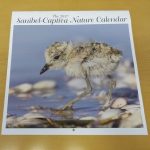
A snowy plover chick, captured by photographer Dick Fortune, will be featured on the cover of the 2017 Sanibel-Captiva Nature calendar.
Fortune, 71, has been taking photos of wildlife most of his life. He and his partner Sarah work as a team and are both staff photographers for Island Scene magazine. Their work has been featured in National Park Service publications and National Geographic and they also are the leading photographers in Living Sanibel and Living Gulf Coast.
Selection for the calendar cover is the latest honor and one that wasn’t easily achieved.
“(The snowy plover chicks) are extremely small, almost to the point where you blink and you miss them,” Fortune said. “They are an epitome of a challenge.”
Wildlife awareness is a primary purpose behind their work.
“We had donated our work for many years to CROW, the Clinic for the Rehabilitation of Wildlife,” Fortune said. “We had donated to different organizations that promote awareness like the Ding Darling Foundation. We were asked to help show awareness of wildlife by putting our photography in the auditorium of Ding Darling, which was a visitor center. And we don’t do this for a fee or cost, we do this because of our love for photography as an art form.”
Through these organizations, Fortune connected with Jim Fowler, owner of the calendar, because both have the same interests in bringing awareness to the wildlife in Sanibel.
The calendar has been going on for 29 years under Fowler’s watch. He decided to start the calendar because Sanibel didn’t have one at the time. He thought the beauty of Sanibel should be shown through pictures.
“I have always been pretty much of a calendar buff,” Fowler said. “Wherever I vacation, I have always wanted to pick up a local calendar. When I first started coming to Sanibel in the ’70s and in the ’80s there wasn’t any calendar. There wasn’t that much local photography.”
During his ‘boredom’ on the beach, he started to put one together. Fowler did the photography, as well as put together a group of photographers to help him out. After the calendar was made, he sent out mailers to different stores. As soon as he gained interest, the calendar went to print. Fowler funded his first calendar.
“I went door to door and store to store and showed them the calendar,” Fowler said.
Year after year, about 4,000 calendars go to print. They were printed in Louisville, Kentucky and Lexington, Kentucky and now they are printed in Ohio. Everything but the ink has stayed the same throughout the years.
Fowler starts taking submissions for photographs in September and October. At the end of October, he makes the selections. In November, the authors write about the subjects and in December the editing and fact-checking is done. It goes to press in March and is in stores by April.
“(This calendar) means quite a bit to me because of all the wonderful people I worked with over the years – the writers, all the different photographers, (and) meeting all the nature organizations,” Fowler said. “So it has become a big part of my life.”
The spoonbill is in every calendar because it is known as the bird of Sanibel. The theme of the calendar doesn’t change. It is always about awareness of the wildlife in Sanibel. Fowler goes through about a thousand photographs a year for the calendar.
The calendar can be purchased at J.N. “Ding” Darling National Wildlife Refuge and CROW. It can also be purchased online through MacIntosh and San/CapCalendar.com.