

County’s annual fertilizer ban goes into effect
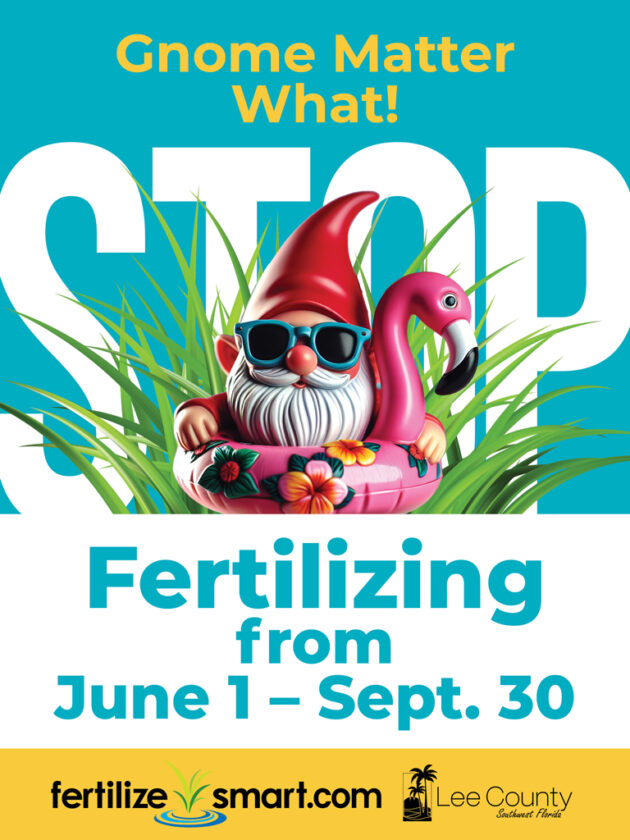
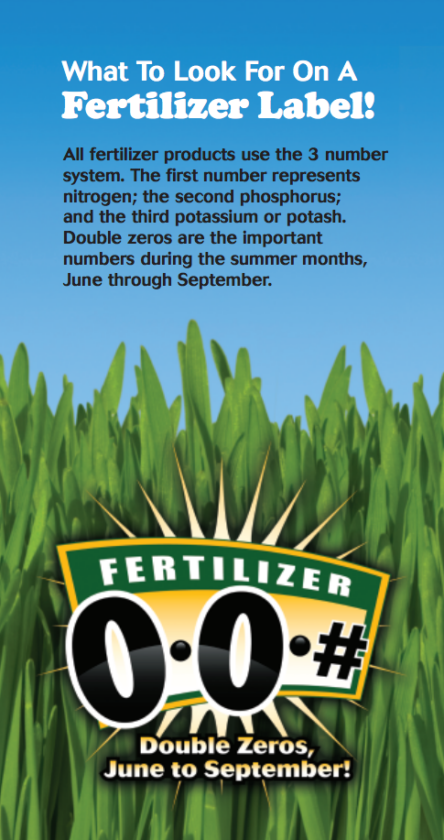
With the arrival of the rainy season, residents and landscapers in unincorporated Lee County — including Captiva — are reminded of the seasonal blackout period for certain fertilizers.
From June 1 through Sept. 30, one component of the county’s annual ordinance goes into effect.
“Summertime is when we focus on a fertilizer restrictions,” Natural Resources Department Operations Manager Lisa Kreiger said, adding that those containing nitrogen or phosphorous cannot be applied.
It is to help minimize unwanted nutrients from entering drainage systems and waterways.
“The summer months is when we get most of our rain,” she said.
During this time of year when Southwest Florida sees the most rainfall, improper and unnecessary fertilization can result in runoff that sends nutrients meant to feed lawns into local waterways.
Kreiger explained that the ordinance was originally put into place in 2008 to minimize the negative environmental effects of fertilizer runoff by curbing excess nutrients from entering waterbodies.
“They can feed HABs (Harmful Algal Blooms) in our watersheds, and they can also create other problems for fish and wildlife,” she said of the fertilizer nutrients.
There are other ways to keep a lawn green.
Rather than cleaning up grass clippings, let them sit to break down and provide nutrients.
“As far as landscape beds are concerned, they can use mulches and compost piles with vegetative scraps,” Kreiger said.
Proper lawn maintenance can also play a part.
“Mow correctly to the right height for grass to be healthy,” she said. “It should naturally be green and lush this time of year because of the rain.”
By skipping turf grass altogether, people can reduce or cut out their reliance on fertilizer.
“Turf grass can be quite needy in terms of fertilizer,” Kreiger said. “We definitely appreciate and strongly encourage people to go with native plantings that are native to this area of Florida.”
Using Florida-friendly plants is also an option.
“They may not be native to this area, but they do not need a lot of water, they do not need a lot of fertilizer,” she said.
In addition to the seasonal blackout period, the county ordinance states:
– Fertilizer may not be applied within 10 feet of a water body, seawall or wetland.
– Fertilizer is not allowed on impervious surfaces such as roads, driveways and sidewalks.
– Deflector shields are required on spreaders to prevent fertilizer from being spread into water body buffers and impervious surfaces.
– Grass clippings and vegetative trimmings may not be swept or blown into ditches, drains and water bodies and onto roads or sidewalks.
Additional best practices that are recommended for year-round include:
– Do not fertilize your lawn if rain is forecasted. Rainfall may wash away fertilizer or cause it to leach through the soil and into waterways.
– Sweep up spills. Never use a hose to wash away spilled granules. It can lead to unwanted nutrients in storm drains and waterways.
– Create a 6-foot low-maintenance zone using a native planting bed or vegetative buffer that does not need to be mowed. It can minimize grass clippings from entering the water.
– Pick up your pet’s waste.
The community is encouraged to follow the ordinance.
“We really appreciate the citizens in Lee County taking a part in protecting our waterbodies,” Kreiger said. “We know that all the things we do can affect our waterways positively or negatively. This is something that everyone can help with.”
“Personal actions really go a long way because we’re all in this together,” she added.
For more information, visit FertilizeSmart.com.
In addition, the county is continuing its “Stop Fertilizing Gnome Matter What” campaign led by Lee the Gnome. Residents will see him in TV ads, on billboards, in social media posts and at events.
To gauge awareness of the ordinance, it has released a brief public survey. The results will allow it to measure understanding of the ordinance and evaluate methods used to reach and inform residents.
To take the survey, visit https://lp.constantcontactpages.com/sv/c7gTE9y/fertilizesmart.
…..
GIVE FERTILIZER A SUMMER VACATION
– Fertilizers containing nitrogen and/or phosphorus cannot be used during the rainy season, June 1 through Sept. 30.
– Fertilizer may not be applied within 10 feet of a water body, seawall or wetland.
– Fertilizer is not allowed on impervious surfaces such as roads, driveways and sidewalks.
– Deflector shields are required on spreaders to prevent fertilizer from being spread into water body buffers and impervious surfaces.
– Grass clippings and vegetative trimmings may not be swept or blown into ditches, drains and water bodies and onto roads or sidewalks.
Source: Lee County Government